


Page 130 - (DK Eyewitness) Travel Guide - Tokyo
P. 130
128 TR A VELERS ’ NEEDS
What to Drink in Tokyo
Green tea and sake (rice wine) are the traditional
drinks of Japan. Both have ancient histories, with
sake being mentioned in the Kojiki (see p23), the first
written historical account of Japan. The appreciation of
each has been elevated to connoisseur ship. The tea
ceremony is the ultimate expression of tea appreciation,
a social ritual imbued with Buddhist ideals. Sake has
long associa tions with Shinto – the fox god Inari
presides over sake – and many Shinto festivals still
involve the drink as a central theme. Other Japan ese
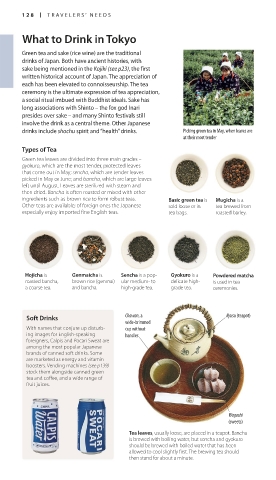
drinks include shochu spirit and “health” drinks. Picking green tea in May, when leaves are
at their most tender
Types of Tea
Green tea leaves are divided into three main grades –
gyokuro, which are the most tender, protected leaves
that come out in May; sencha, which are tender leaves
picked in May or June; and bancha, which are large leaves
left until August. Leaves are sterilized with steam and
then dried. Bancha is often roasted or mixed with other
ingredients such as brown rice to form robust teas. Basic green tea is Mugicha is a
Other teas are available; of foreign ones the Japanese sold loose or in tea brewed from
especially enjoy imported fine English teas. tea bags. roasted barley.
Hojicha is Genmaicha is Sencha is a pop Gyokuro is a Powdered mat cha
roasted bancha, brown rice (gen mai) ular medium to delicate high is used in tea
a coarse tea. and bancha. highgrade tea. grade tea. ceremonies.
Soft Drinks Chawan, a Kyusu (teapot)
wide-brimmed
With names that conjure up disturb cup without
ing images for Englishspeaking handles
foreigners, Calpis and Pocari Sweat are
among the most popular Japanese
brands of canned soft drinks. Some
are marketed as energy and vitamin
boosters. Vending machines (see p139)
stock them alongside canned green
tea and coffee, and a wide range of
fruit juices.
Wagashi
(sweets)
Tea leaves, usually loose, are placed in a teapot. Bancha
is brewed with boiling water, but sencha and gyokuro
should be brewed with boiled water that has been
allowed to cool slightly first. The brewing tea should
then stand for about a minute.
128-129_EW_Tokyo.indd 128 12/09/16 11:28 am

