


Page 59 - Amphibian
P. 59
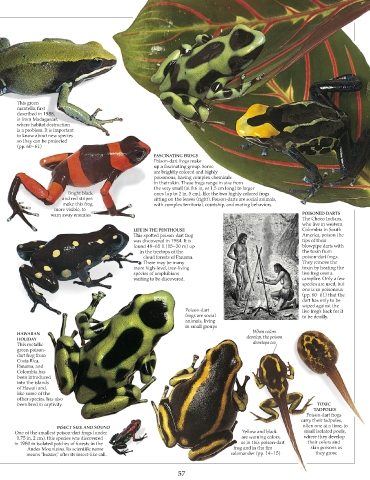
This green
       mantella, first
       described in 1988,
       is from Madagascar,
       where habitat destruction
       is a problem. It is important
       to know about new species
       so they can be protected
       (pp. 60–61)
                                                    FASCINATING FROGS
                                                    Poison-dart frogs make
                                                    up a fascinating group. Some
                                                    are brightly colored and highly
                                                    poisonous, having complex chemicals
                                                    in their skin. These frogs range in size from
                                                    the very small (at 0.6 in, or 1.5 cm long) to larger
                        Bright black                ones (up to 2 in, 5 cm), like the two highly colored frogs
                      and red stripes               sitting on the leaves (right). Poison-darts are social animals,
                      make this frog                with complex territorial, courtship, and mating behaviors.
                   more visible, to
                  warn away enemies                                                                  POISONED DARTS
                                                                                                     The Choco Indians,
                                                                                                     who live in western
                                             LIFE IN THE PENTHOUSE                                   Colombia in South
                                             This spotted poison-dart frog                           America, poison the
                                             was discovered in 1984. It is                           tips of their
                                             found 48–65 ft (15–20 m) up                             blowpipe darts with
                                               in the treetops of the                                the toxin from
                                                cloud forests of Panama.                             poison-dart frogs.
                                                There may be many                                    They remove the
                                             more high-level, tree-living                            toxin by heating the
                                             species of amphibians                                   live frog over a
                                             waiting to be discovered.                               campfire. Only a few
                                                                                                     species are used, but
                                                                                                     one is so poisonous
                                                                                                     (pp. 60–61) that the
                                                                                                     dart has only to be
                                                                                                     wiped against the
                                                              Poison-dart                            live frog’s back for it
                                                              frogs are social                       to be deadly.
                                                              animals, living
                                                              in small groups
                                                                                     When colors
       HAWAIIAN
       HOLIDAY                                                                     develop, the poison
       This metallic                                                                 develops too
       green poison-
       dart frog from
       Costa Rica,
       Panama, and
       Colombia has
       been introduced
       into the islands
       of Hawaii and,
       like some of the
       other species, has also
       been bred in captivity.                                                                            TOXIC
                                                                                                         TADPOLES
                                                                                                      Poison-dart frogs
                                                                                                     carry their tadpoles,
                    INSECT SIZE AND SOUND                                                            often one at a time, to
      One of the smallest poison-dart frogs (under                               Yellow and black     small isolated pools,
       0.75 in, 2 cm), this species was discovered                               are warning colors,   where they develop
      in 1980 in isolated patches of forests in the                              as in this poison-dart   their colors and
          Andes Mountains. Its scientific name                                frog and in the fire      skin poisons as
          means “buzzer,” after its insect-like call.                        salamander (pp. 14–15)      they grow.


                                                            5

