


Page 24 - (DK) The Dog Encyclopedia
P. 24
INTRODUCTION TO DOGS  |  DOGS IN ART AND ADVERTISING


          Dogs in art and advertising


                                                                                                                            HOGARTH
                                                                                                                            WITH HIS PET
                                                                                                                            PUG, TRUMP
          Drawn and painted, sculpted, woven into tapestries, photographed, used as company logos:
          dogs have had visual appeal for the entire span of their association with humans. In almost
          every type of medium, they tell stories without words, say something about their owners
          or the people who portray them, and reflect the lifestyles and tastes of different ages. Most
          people like dogs and enjoy them as subjects in art. Commercial organizations have long
          relied on this unfailing attraction by using dog images to promote goods and services.


          PORTRAYING DOGS                           Saharan Africa, believed by some authorities   unicorns across medieval tapestries; an
          A history of the domestic dog can be traced   to be more than 5,000 years old. Dogs,   estimated 35 dogs appear in the famous
          through the development of art. Probably   similar in appearance to today’s greyhounds,   Bayeux Tapestry illustrating the Norman
          some of the earliest depictions of dogs, in   hunted on through the Classical ages of   Conquest of Britain, albeit largely confined
          their original role as hunting companions,    Greece and Rome in superbly rendered   to the fringes of the main action. The hunting
          are prehistoric rock paintings discovered in   sculptures, especially associated with the   dog theme continued into the sporting prints
                                                    Greek goddess Artemis (Roman Diana).       of the 18th century, with their packs of
                                                    The best-known Classical dogs are not      foxhounds in full cry, and the portraits
                                                    hunters, though, but the fierce, chained    of gundogs, dead game hanging limply
                                                    guard dogs in lifelike mosaics retrieved    from their jaws, favored by the 19th-century
                                                    from the ashes of Pompeii. In later ages   landed shooting fraternity.
                                                    slender sight hounds pursued deer and        Before dogs became accepted as the norm
                                                                                               in ordinary homes during the 19th century,
                                                                                               they were usually painted as pets only in
                                                    Rock carving
                                                    From the Neolithic period to the 21st century, dogs have   portraits commissioned by the wealthy—
                                                    been enjoyed as art subjects. This petroglyph in Youf    as companions of aristocrats or in the arms
                                                    Ahakit Tassili Ahaggar, Sahara Desert, Algeria, is one of
                                                    the earliest depictions.                   of small beribboned children. But dogs


                                                                                               Ringwood, a Brocklesby Foxhound
                                                                                               This anatomically accurate portrait of a Foxhound painted
                                                                                               by English painter George Stubbs in 1792 reveals how
                                                                                               Foxhounds looked at the time.


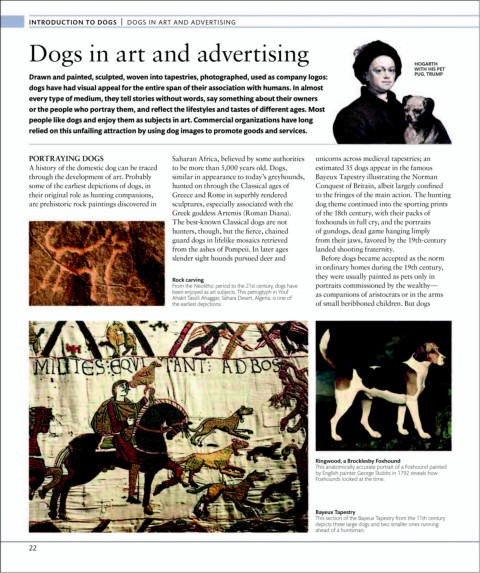
                                                                                               Bayeux Tapestry
                                                                                               This section of the Bayeux Tapestry from the 11th century
                                                                                               depicts three large dogs and two smaller ones running
                                                                                               ahead of a huntsman.


          22

