


Page 337 - (DK) The Dog Encyclopedia
P. 337
SIGNS OF HEALTH


           SIGNS OF A PROBLEM

           ■ Unwillingness to exercise; lethargy, tiring   ■ Unintentional weight loss         ■ Abnormal discharge: from any orifice (such as
           unexpectedly on a walk                   ■ Weight gain, particularly if the dog has developed   the mouth, nose, ear, vulva, prepuce, or anus) from
           ■ Loss of coordination or bumping into objects  a distended abdomen                 which there is not usually a discharge, or because
           ■ Altered breathing pattern or an abnormal sound   ■ Reduced appetite or refusing food altogether  the normal smell, color, or consistency has altered
           during respiration                       ■ Voracious appetite, or a change in what the    ■ Coat changes: dull with a greasy texture, or
           ■ Coughing or sneezing                   dog will eat                               excessively dry; debris in the coat, such as flea
           ■ Open wound                             ■ Vomiting, or regurgitation of food shortly    dirts, actual fleas, scabs, or scales
           ■ Swelling or unusual bump               after eating                               ■ Excessive hair loss resulting in areas of baldness
           ■ Pain, swelling, and heat in a joint    ■ Diarrhea or difficulty passing a motion   ■ Change in coat color (may occur so gradually
           ■ Swollen eyes or eyelids                ■ Bloated abdomen                          that it is noticed only when compared with an old
           ■ Blood: from a wound; passed in urine (which   ■ Crying with pain when passing feces or urine   photograph)
           will appear pink or contain blood clots); in feces or   ■ Itchiness: rubbing at mouth, eyes, or ears;    ■ Changes to gum color—becoming paler or
           in vomit                                 dragging rear along the ground (“scooting”)    yellowing; or a bluish tinge to gums; or grey
           ■ Limping or stiffness                   or washing excessively in that area; or all-over    discharge at gum line
           ■ Shaking head                           bodily itching                             ■ High temperature


          RECOGNIZING A PROBLEM
          Any change in your dog may be a warning
          of poor health. The most trivial sign, such
          as a droopy eyelid, should not be dismissed,
          since it could be significant. Your dog may
          have an internal problem such as an upset
          stomach, an external problem affecting the
          coat and skin, or a combination of the two.
          You may notice only vague signs, such as
          your dog sleeping more or exercising less
          readily, or something obviously wrong, such
          as your dog limping, or shaking his head
          because a grass awn is trapped in his ear.
           Many common disorders are minor
          and easily treated, especially if they are
          recognized early. Always speak to your
          vet before attempting any home treatment.
          What might seem an appropriate course
          of action for humans could be harmful
          to a dog. It may be sufficient to act on
          advice given by your veterinary practice
          over the telephone, although often the
          vet will need to examine your dog to be
          certain of how best to proceed. If there
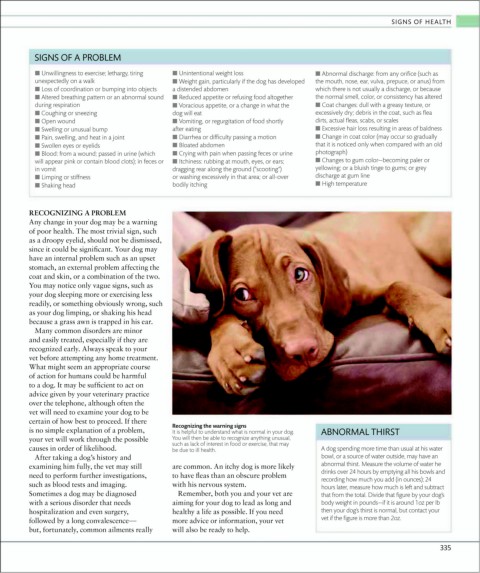
                                                    Recognizing the warning signs
          is no simple explanation of a problem,    It is helpful to understand what is normal in your dog.   ABNORMAL THIRST
          your vet will work through the possible   You will then be able to recognize anything unusual,
                                                    such as lack of interest in food or exercise, that may
          causes in order of likelihood.            be due to ill health.                        A dog spending more time than usual at his water
           After taking a dog’s history and                                                      bowl, or a source of water outside, may have an
          examining him fully, the vet may still    are common. An itchy dog is more likely      abnormal thirst. Measure the volume of water he
                                                                                                 drinks over 24 hours by emptying all his bowls and
          need to perform further investigations,    to have fleas than an obscure problem
                                                                                                 recording how much you add (in ounces); 24
          such as blood tests and imaging.          with his nervous system.
                                                                                                 hours later, measure how much is left and subtract
          Sometimes a dog may be diagnosed            Remember, both you and your vet are        that from the total. Divide that figure by your dog’s
          with a serious disorder that needs        aiming for your dog to lead as long and      body weight in pounds—if it is around 1oz per lb
          hospitalization and even surgery,         healthy a life as possible. If you need      then your dog’s thirst is normal, but contact your
          followed by a long convalescence—         more advice or information, your vet         vet if the figure is more than 2oz.
          but, fortunately, common ailments really    will also be ready to help.


                                                                                                                                    335

