


Page 28 - Shark
P. 28
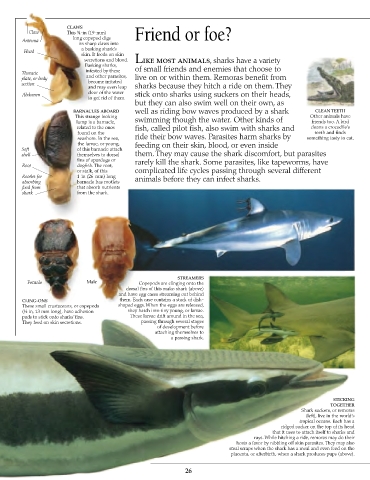
clawS
           Claw        This ¾-in (19-mm)      Friend or foe?
        Antenna          long copepod digs
                           its sharp claws into
         Head               a basking shark’s
                            skin. It feeds on skin
                             secretions and blood.   Like most animals, sharks have a variety
                             Basking sharks,   of small friends and enemies that choose to
        Thoracic             infested by these
        plate, or body        and other parasites,   live on or within them. Remoras benefit from
                              and may even leap  sharks because they hitch a ride on them. They
        section               become irritated
        Abdomen               clear of the water   stick onto sharks using suckers on their heads,
                              to get rid of them.
                                              but they can also swim well on their own, as
                         BarnacleS aBoard     well as riding bow waves produced by a shark               clean teeth
                          This strange looking   swimming though the water. Other kinds of              Other animals have
                          lump is a barnacle,                                                           friends too. A bird
                           related to the ones   fish, called pilot fish, also swim with sharks and     cleans a crocodile’s
                           found on the                                                                  teeth and finds
                           seashore. In the sea,   ride their bow waves. Parasites harm sharks by      something tasty to eat.
                           the larvae, or young,   feeding on their skin, blood, or even inside
        Soft               of this barnacle attach
        shell              themselves to dorsal   them. They may cause the shark discomfort, but parasites
                           fins of spurdogs or   rarely kill the shark. Some parasites, like tapeworms, have
        Root               dogfish. The root,
                           or stalk, of this    complicated life cycles passing through several different
        Rootlet for        1-in (26-mm) long   animals before they can infect sharks.
        absorbing          barnacle has rootlets
        food from          that absorb nutrients
        shark              from the shark.


                                                            StreamerS
          Female              Male             Copepods are clinging onto the
                                           dorsal fins of this mako shark (above)
                                        and have egg cases streaming out behind
        cling-onS                        them. Each case contains a stack of disk-
        These small crustaceans, or copepods   shaped eggs. When the eggs are released,
        (½ in, 13 mm long), have adhesion   they hatch into tiny young, or larvae.
        pads to stick onto sharks’ fins.    These larvae drift around in the sea,
        They feed on skin secretions.           passing through several stages
                                                     of development before
                                                    attaching themselves to
                                                          a passing shark.


                                                                                                               Sticking
                                                                                                              together
                                                                                                     Shark suckers, or remoras
                                                                                                      (left), live in the world’s
                                                                                                    tropical oceans. Each has a
                                                                                              ridged sucker on the top of its head
                                                                                           that it uses to attach itself to sharks and
                                                                                     rays. While hitching a ride, remoras may do their
                                                                               hosts a favor by nibbling off skin parasites. They may also
                                                                             steal scraps when the shark has a meal and even feed on the
                                                                             placenta, or afterbirth, when a shark produces pups (above).

                                                              26

