


Page 31 - Shark
P. 31
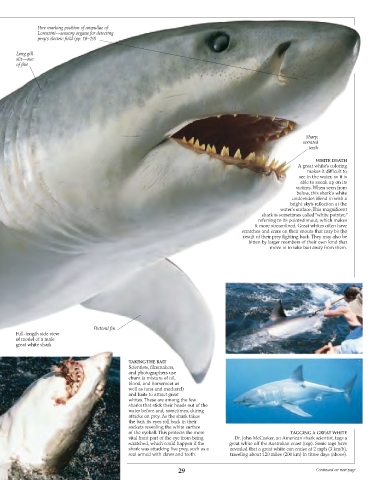
Pore marking position of ampullae of
              Lorenzini—sensory organs for detecting
              prey’s electric field (pp. 18–19)

      Long gill
      slit—one
      of five


                                                                                                      Sharp,
                                                                                                     serrated
                                                                                                       teeth

                                                                                                          WhiTe deaTh
                                                                                                    A great white’s coloring
                                                                                                       makes it difficult to
                                                                                                    see in the water, so it is
                                                                                                    able to sneak up on its
                                                                                                   victims. When seen from
                                                                                                   below, this shark’s white
                                                                                                  undersides blend in with a
                                                                                                 bright sky’s reflection at the
                                                                                              water’s surface. This magnificent
                                                                                        shark is sometimes called “white pointer,”
                                                                                       referring to its pointed snout, which makes
                                                                                     it more streamlined. Great whites often have
                                                                                 scratches and scars on their snouts that may be the
                                                                                  result of their prey fighting back. They may also be
                                                                                   bitten by larger members of their own kind that
                                                                                          move in to take bait away from them.


                                Pectoral fin
      Full-length side view
      of model of a male
      great white shark

                                            Taking The baiT
                                            Scientists, filmmakers,
                                            and photographers use
                                            chum (a mixture of oil,
                                            blood, and horsemeat as
                                            well as tuna and mackerel)
                                            and baits to attract great
                                            whites. These are among the few
                                            sharks that stick their heads out of the
                                            water before and, sometimes, during
                                            attacks on prey. As the shark takes
                                            the bait, its eyes roll back in their
                                            sockets revealing the white surface
                                            of the eyeball. This protects the more               Tagging a greaT WhiTe
                                            vital front part of the eye from being   Dr. John McCosker, an American shark scientist, tags a
                                            scratched, which could happen if the   great white off the Australian coast (top). Sonic tags have
                                            shark was attacking live prey, such as a   revealed that a great white can cruise at 2 mph (3 km/h),
                                            seal armed with claws and teeth.  traveling about 120 miles (200 km) in three days (above).

                                                            29                                            Continued on next page

