


Page 34 - Shark
P. 34
Gentle giants


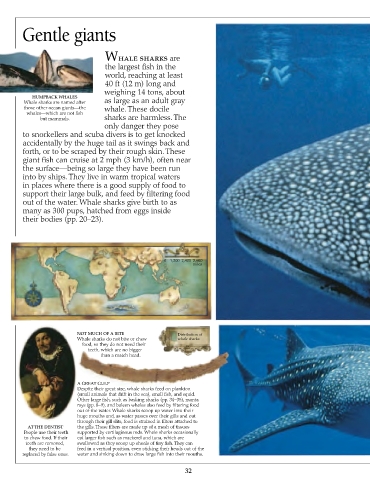
                                    Whale sharks are
                                    the largest fish in the
                                    world, reaching at least
                                    40 ft (12 m) long and
                                    weighing 14 tons, about
            Humpback wHales
         Whale sharks are named after   as large as an adult gray
         those other ocean giants—the   whale. These docile
          whales—which are not fish
              but mammals.          sharks are harmless. The
                                    only danger they pose
         to snorkellers and scuba divers is to get knocked
         accidentally by the huge tail as it swings back and
         forth, or to be scraped by their rough skin. These
         giant fish can cruise at 2 mph (3 km/h), often near
         the surface—being so large they have been run
         into by ships. They live in warm tropical waters
         in places where there is a good supply of food to
         support their large bulk, and feed by filtering food
         out of the water. Whale sharks give birth to as
         many as 300 pups, hatched from eggs inside
         their bodies (pp. 20–23).


                                                       0  1,200 2,400 3,600
                                                                 miles


                           Not mucH of a bite               Distribution of
                           Whale sharks do not bite or chew   whale sharks
                            food, so they do not need their
                              teeth, which are no bigger
                                  than a match head.


                           a great gulp
                           Despite their great size, whale sharks feed on plankton
                           (small animals that drift in the sea), small fish, and squid.
                           Other large fish, such as basking sharks (pp. 34–35), manta
                           rays (pp. 8–9), and baleen whales also feed by filtering food
                           out of the water. Whale sharks scoop up water into their
                           huge mouths and, as water passes over their gills and out
                           through their gill slits, food is strained in filters attached to
          at tHe deNtist   the gills. These filters are made up of a mesh of tissues
         People use their teeth   supported by cartilaginous rods. Whale sharks occasionally
         to chew food. If their   eat larger fish such as mackerel and tuna, which are
          teeth are removed,   swallowed as they scoop up shoals of tiny fish. They can
           they need to be   feed in a vertical position, even sticking their heads out of the
        replaced by false ones.  water and sinking down to draw large fish into their mouths.

                                                              32

