


Page 76 - Fish and Amphibians (Britannica Illustrated Science Library)
P. 76
72 AMPHIBIANS FISH AND AMPHIBIANS 73
Poison in Color Frogs and Mantellas
POISON BULGE OF The secretions of all dendrobate frogs are
THE EYE poisonous, but only a very small number
WARNING GLAND are sufficiently toxic to kill a person. The most
ot all that glitters is gold, nor is it healthy. The skin of some amphibians has COLOR important toxins are batracotoxins,
glands that secrete poison. Color is a warning sign, a way of keeping possible BANDS pumiliotoxins, histrionicotoxins, and
gephyrotoxins. The batracotoxins affect the
N attackers away, and also a way to defend territory during mating season. The nervous equilibrium of the body and cause
most dangerous frogs are the poison dart frogs from Central and South America and arrhythmia, fibrillation, and cardiac
arrest. On the other hand, pumiliotoxins
the mantella frogs of Madagascar. They are a small, very sociable species that live cause motor difficulties, partial paralysis
in small groups, are diurnal, and, in some cases, live in trees. of extremities, salivation, convulsions,
and, finally, death. These amphibians
obtain their poison from their diet: certain GREEN AND BLACK
millipedes and coleopterans, as well as ants. POISON DART FROG
Dendrobates auratus
Any insect that feeds on plants that
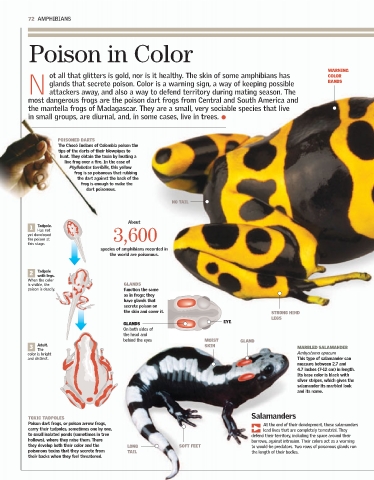
POISONED DARTS Spotted body and
The Chocó Indians of Colombia poison the synthesize alkaloids and is then ingested by a variety of colors
tips of the darts of their blowpipes to poisonous frog provides the
hunt. They obtain the toxin by heating a frog with poison.
live frog over a fire. In the case of
Phyllobates terribilis, this yellow
frog is so poisonous that rubbing
the dart against the back of the
frog is enough to make the
dart poisonous.
NO TAIL
BULGING
EYE
About YELLOW-BANDED
1 Tadpole. POISON DART FROG
Has not SKIN
yet developed 3,600 Colorful and moist, Dendrobates leucomelas
the poison at
this stage. the skin sweats
species of amphibians recorded in poison when the frog
the world are poisonous. feels threatened. Habitat South America
COSTA RICAN VARIABLE
HARLEQUIN TOAD
Number of species 5,000 Atelopus varius
2 Tadpole FINGERS WITH Size 0.4-1.9 inches (1-5 cm) Regular red spots
with legs.
When the color SUCKER PADS
is visible, the GLANDS
poison is deadly. function the same
as in frogs; they
have glands that Lethal
secrete poison on SOFT
the skin and cover it. STRONG HIND FEET More than 100 toxins lethal to humans
LEGS have been identified in these frogs.
EYE
GLANDS
On both sides of
the head and ORANGE
behind the eyes MOIST GLAND HEAD
Adult. SKIN
3 MARBLED SALAMANDER TINY PERIL
The
color is bright Ambystoma opacum The golden poison dart
and distinct. This type of salamander can frog is one of the most BLUE POISON
measure between 2.7 and TADPOLES poisonous animals on the DART FROG
4.7 inches (7-12 cm) in length. are transported planet. It can kill 10 Dendrobates
Its base color is black with stuck to the back. human beings with the azureus
silver stripes, which gives the quantity of poison it The color is
salamander its marbled look stores. bright blue.
and its name.
RETICULATED
ARROW-POISON
Salamanders FROG THE COLOR OF POISON
TOXIC TADPOLES Dendrobates In nature, bright, flashy
Poison dart frogs, or poison arrow frogs, At the end of their development, these salamanders reticulatus colors usually serve as a
carry their tadpoles, sometimes one by one, lead lives that are completely terrestrial. They warning sign to predators.
to small isolated ponds (sometimes in tree defend their territory, including the space around their Thus, a frog can use color to
hollows), where they raise them. There burrows, against intrusion. Their colors act as a warning defend its territory from
they develop both their color and the LONG SOFT FEET to would-be predators. Two rows of poisonous glands run other males during mating
poisonous toxins that they secrete from TAIL the length of their bodies. season.
their backs when they feel threatened.

