


Page 72 - BBC Wildlife Volume 36 #06
P. 72
LEMON SHARKS


                                                                       FOR NOW,WE KNOWVERYLITTLE

                                                                       ABOUTHOWSHARKSWILL
                                                                       RESPONDASTHE OCEANS GROW

                                                                       WARMER AND MORE ACIDIC.


                                                                         Climate change is another threat that looms over the
                                                                       lemon sharks, although at the moment no one really
                                                                       knows how bad it will be for them. As shark biologist
                                                                       Ian Bouyoucos points out, studies of the effects of
                                                                       climate change on sharks lag far behind those looking
                                                                       at bony fish. The reason for this generally comes down
                                                                       to the difficulty of working with often very big, free-
                                                                       ranging shark species.
                                                                         Rising sea temperatures are likely to be a big problem.
                                                                       “Sharks, for the most part, don’t regulate their body
                                                                       temperature,” explains Bouyoucos. “So the higher the
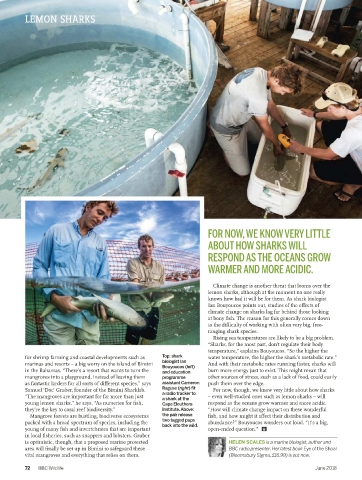
          for shrimp farming and coastal developments such as  Top: shark  water temperature, the higher the shark’s metabolic rate.”
                                                        biologist Ian
          marinas and resorts – a big worry on the island of Bimini    And with their metabolic rates running faster, sharks will
                                                        Bouyoucos (left)
          in the Bahamas. “There’s a resort that wants to turn the  and education  burn more energy just to exist. This might mean that
          mangroves into a playground, instead of leaving them  programme  other sources of stress, such as a lack of food, could easily
          as fantastic larders for all sorts of different species,” says  assistant Cameron  push them over the edge.
          Samuel ‘Doc’ Gruber, founder of the Bimini Sharklab.  Raguse (right) fit  For now, though, we know very little about how sharks
                                                        a radio tracker to
          “The mangroves are important for far more than just          – even well-studied ones such as lemon sharks – will
                                                        a shark at the
          young lemon sharks,” he says. “As nurseries for fish,  Cape Eleuthera  respond as the oceans grow warmer and more acidic.
          they’re the key to coral reef biodiversity.”  Institute.Above:  “How will climate change impact on these wonderful
           Mangrove forests are bustling, biodiverse ecosystems  the pair release  fish, and how might it affect their distribution and
                                                        two tagged pups
          packed with a broad spectrum of species, including the       abundance?” Bouyoucos wonders out loud. “It’s a big,
                                                        back into the wild.
          young of many fish and invertebrates that are important       open-ended question.”
          in local fisheries, such as snappers and lobsters. Gruber
          is optimistic, though, that a proposed marine protected             HELEN SCALES is a marine biologist, author and
          area will finally be set up in Bimini to safeguard these             BBC radio presenter. Her latest book Eye of the Shoal
          vital mangroves and everything that relies on them.                 (Bloomsbury Sigma, £16.99) is out now.
          72  BBC Wildlife                                                                                  June 2018

