


Page 18 - World of Animals - Issue #39
P. 18
Adorable acrobats
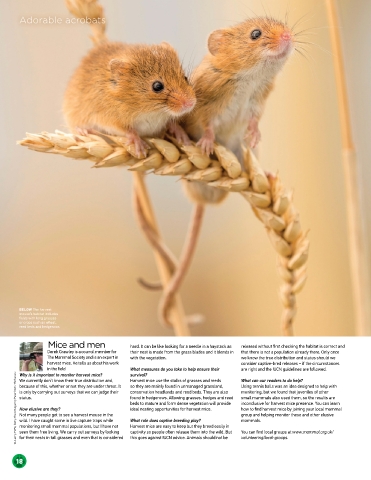
BELOW The harvest
mouse’s habitat includes
fields with long grasses
or crops such as wheat,
reed beds and hedgerows
Mice and men hard. It can be like looking for a needle in a haystack as released without first checking the habitat is correct and
Derek Crawley is a council member for their nest is made from the grass blades and it blends in that there is not a population already there. Only once
The Mammal Society and is an expert in with the vegetation. we know the true distribution and status should we
harvest mice. He tells us about his work consider captive-bred releases – if the circumstances
in the field What measures do you take to help ensure their are right and the IUCN guidelines are followed.
© Alamy; FLPA; Getty; The Art Agency/Peter Scott; Thinkstock is only by carrying out surveys that we can judge their conservation headlands and reed beds. They are also monitoring, but we found that juveniles of other
Why is it important to monitor harvest mice?
survival?
What can our readers to do help?
We currently don’t know their true distribution and,
Harvest mice use the stalks of grasses and reeds
Using tennis balls was an idea designed to help with
because of this, whether or not they are under threat. It
so they are mainly found in unmanaged grassland,
small mammals also used them, so the results are
found in hedgerows. Allowing grasses, hedges and reed
status.
inconclusive for harvest mice presence. You can learn
beds to mature and form dense vegetation will provide
How elusive are they?
ideal nesting opportunities for harvest mice.
how to find harvest mice by joining your local mammal
group and helping monitor these and other elusive
Not many people get to see a harvest mouse in the
What role does captive breeding play?
wild. I have caught some in live capture traps while
mammals.
monitoring small mammal populations, but I have not
Harvest mice are easy to keep but they breed easily in
You can find local groups at www.mammal.org.uk/
seen them free living. We carry out surveys by looking
captivity so people oen release them into the wild. But
for their nests in tall grasses and even that is considered
18 this goes against IUCN advice. Animals should not be volunteering/local-groups.
012-018_Harvest Mouse.indd 18 12/10/2016 14:45

