


Page 65 - World of Animals - Issue #29
P. 65
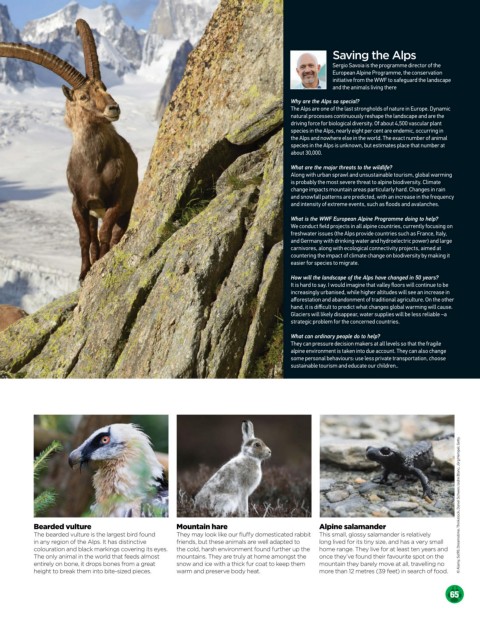
Saving the Alps
                                                                                                Sergio Savoia is the programme director of the
                                                                                                European Alpine Programme, the conservation
                                                                                                initiative from the WWF to safeguard the landscape
                                                                                                and the animals living there
                                                                                    Why are the Alps so special?
                                                                                    The Alps are one of the last strongholds of nature in Europe. Dynamic
                                                                                    natural processes continuously reshape the landscape and are the
                                                                                    driving force for biological diversity. Of about 4,500 vascular plant
                                                                                    species in the Alps, nearly eight per cent are endemic, occurring in
                                                                                    the Alps and nowhere else in the world. The exact number of animal
                                                                                    species in the Alps is unknown, but estimates place that number at
                                                                                    about 30,000.

                                                                                    What are the major threats to the wildlife?
                                                                                    Along with urban sprawl and unsustainable tourism, global warming
                                                                                    is probably the most severe threat to alpine biodiversity. Climate
                                                                                    change impacts mountain areas particularly hard. Changes in rain
                                                                                    and snowfall patterns are predicted, with an increase in the frequency
                                                                                    and intensity of extreme events, such as floods and avalanches.

                                                                                    What is the WWF European Alpine Programme doing to help?
                                                                                    We conduct field projects in all alpine countries, currently focusing on

                                                                                    freshwater issues (the Alps provide countries such as France, Italy,
                                                                                    and Germany with drinking water and hydroelectric power) and large
                                                                                    carnivores, along with ecological connectivity projects, aimed at
                                                                                    countering the impact of climate change on biodiversity by making it
                                                                                    easier for species to migrate.
                                                                                    How will the landscape of the Alps have changed in 50 years?
                                                                                    It is hard to say. I would imagine that valley floors will continue to be

                                                                                    increasingly urbanised, while higher altitudes will see an increase in

                                                                                    afforestation and abandonment of traditional agriculture. On the other

                                                                                    hand, it is diffi cult to predict what changes global warming will cause.
                                                                                    Glaciers will likely disappear, water supplies will be less reliable –a
                                                                                    strategic problem for the concerned countries.
                                                                                    What can ordinary people do to help?
                                                                                    They can pressure decision makers at all levels so that the fragile
                                                                                    alpine environment is taken into due account. They can also change
                                                                                    some personal behaviours: use less private transportation, choose
                                                                                    sustainable tourism and educate our children..


              Bearded vulture                        Mountain hare                          Alpine salamander                     © Alamy; Sol90; Dreamstime; Thinkstock; Daniel Schwen; Isidre Blanc; Jörg Hempel; Getty
              The bearded vulture is the largest bird found   They may look like our fluffy domesticated rabbit   This small, glossy salamander is relatively

              in any region of the Alps. It has distinctive   friends, but these animals are well adapted to   long lived for its tiny size, and has a very small
              colouration and black markings covering its eyes.   the cold, harsh environment found further up the   home range. They live for at least ten years and
              The only animal in the world that feeds almost   mountains. They are truly at home amongst the   once they’ve found their favourite spot on the
              entirely on bone, it drops bones from a great   snow and ice with a thick fur coat to keep them   mountain they barely move at all, travelling no
              height to break them into bite-sized pieces.  warm and preserve body heat.    more than 12 metres (39 feet) in search of food.

                                                                                                                               65

