


Page 58 - History of War - Issue 25-16
P. 58
FORGING THE ULTIMATE BLADE


          A SWORD


          EVERY OC


          BLADE DESIGNS HAVE ALTERED THROUGHOUT THE AGES TO RE


                                                                 CLAYMORE

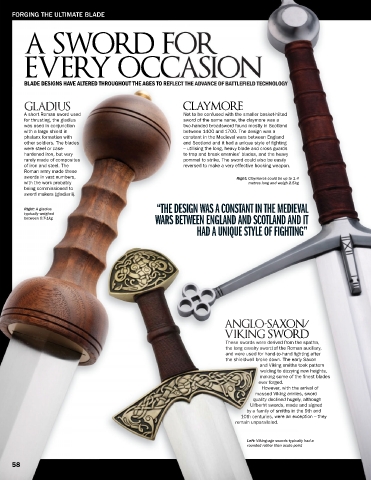
          A short Roman sword used                               Not to be confused with the smaller basket-hilted
          for thrusting, the gladius                             sword of the same name, the claymore was a
          was used in conjunction                                two-handed broadsword found mostly in Scotland
          with a large shield in                                 between 1400 and 1700. The design was a
          phalanx formation with                                 constant in the Medieval wars between England
          other soldiers. The blades                             and Scotland and it had a unique style of i ghting
          were steel or case-                                    – utilising the long, heavy blade and cross guards
          hardened iron, but very                                to trap and break enemies’ blades, and the heavy
          rarely made of composites                              pommel to strike. The sword could also be easily
          of iron and steel. The                                 reversed to make a very effective hooking weapon.
          Roman army made these
          swords in vast numbers,
          with the work probably
          being commissioned to
          sword makers (gladiarii).
                                                              DESIGN WAS A CONSTANT IN THE MEDIEVAL

                                                               BETWEENENGLANDANDSCOTLANDAND IT

                                                                      HADAUNIQUESTYLEOFFIGHTING”


                                                                                               SAXON/
                                                                                               SWORD

                                                                                                erived from the spatha,
                                                                                                 of the Roman auxiliary,
                                                                                                nd-to-hand i ghting after
                                                                                                own. The early Saxon
                                                                                                Viking smiths took pattern
                                                                                                ng to dizzying new heights,
                                                                                                ng some of the i nest blades
                                                                                                orged.
                                                                                                ever, with the arrival of
                                                                                                d Viking armies, sword
                                                                                                eclined hugely, although
                                                                                                words, made and signed
                                                                                                of smiths in the 9th and
                                                                                                 , were an exception  –  they
                                                                                                led.


     58

