


Page 164 - The Dinosaur Book and Other Wonders of the Prehistoric World (DK-Smithsonian)
P. 164
Flippers and tails


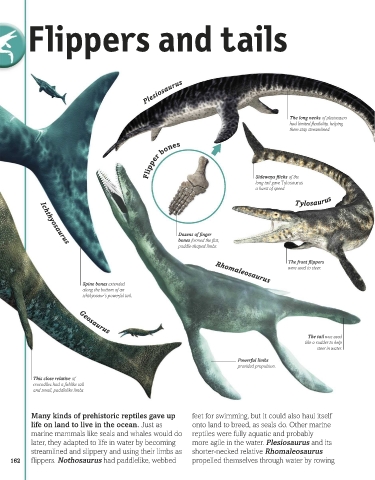
                                                Plesiosaurus


                                                                                                The long necks of plesiosaurs
                                                                                                had limited flexibility, helping
                                                                                                them stay streamlined.
                                                 Flipper bones


                                                                                    Sideways flicks of the
                                                                                    long tail gave Tylosaurus
                                                                                    a burst of speed.
                                                                                                 Tylosaurus


                                                           Dozens of finger
                                                           bones formed the flat,
              Ichthyosaurus
                                                           paddle-shaped limbs.

                                                                                               The front flippers
                                                                                               were used to steer.
                                                                       Rhomaleosaurus
                            Spine bones extended
                            along the bottom of an
                            ichthyosaur’s powerful tail.


                           Geosaurus
                                                                                                      The tail was used
                                                                                                     like a rudder to help
                                                                                                         steer in water.

                                                                               Powerful limbs
                                                                               provided propulsion.
            This close relative of
            crocodiles had a fishlike tail
            and small, paddlelike limbs.


           Many kinds of prehistoric reptiles gave up           feet for swimming, but it could also haul itself
           life on land to live in the ocean. Just as           onto land to breed, as seals do. Other marine
           marine mammals like seals and whales would do        reptiles were fully aquatic and probably
           later, they adapted to life in water by becoming     more agile in the water. Plesiosaurus and its
           streamlined and slippery and using their limbs as    shorter-necked relative Rhomaleosaurus
    162    flippers. Nothosaurus had paddlelike, webbed         propelled themselves through water by rowing


   US_162-163_Flippers_and_tails.indd   162                                                                      26/04/18   3:30 PM

