


Page 198 - The Dinosaur Book and Other Wonders of the Prehistoric World (DK-Smithsonian)
P. 198
Primates


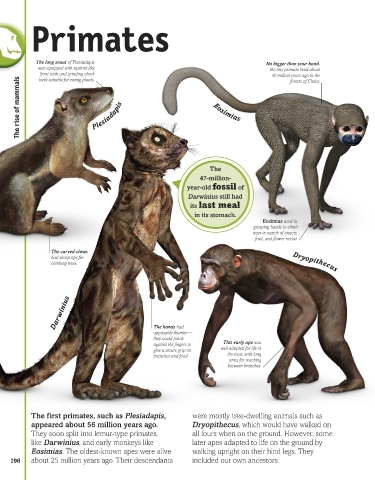
             The long snout of Plesiadapis                                              No bigger than your hand,
             was equipped with squirrel-like                                             the tiny primate lived about
              front teeth and grinding cheek                                              40 million years ago in the
              teeth suitable for eating plants.
       The rise of mammals     Plesiadapis                             Eosimias
                                                                                                forests of China.


                                                                      The
                                                                  47-million-
                                                              year-old fossil of
                                                              Darwinius still had
                                                               its last meal
                                                                 in its stomach.
                                                                                       Eosimias used its
                                                                                    grasping hands to climb
                                                                                    trees in search of insects,
                                                                                    fruit, and flower nectar.

                  The curved claws
                  had sharp tips for
                  climbing trees.                                                                Dryopithecus


                   Darwinius


                                                   The hands had
                                                   opposable thumbs—
                                                   they could pinch
                                                   against the fingers to   This early ape was
                                                   give a secure grip on   well adapted for life in
                                                   branches and food.      the trees, with long
                                                                            arms for reaching
                                                                           between branches.


           The first primates, such as Plesiadapis,             were mostly tree-dwelling animals such as
           appeared about 56 million years ago.                 Dryopithecus, which would have walked on
           They soon split into lemur-type primates,            all fours when on the ground. However, some
           like Darwinius, and early monkeys like               later apes adapted to life on the ground by
           Eosimias. The oldest-known apes were alive           walking upright on their hind legs. They
    196    about 25 million years ago. Their descendants        included our own ancestors.


   US_196-197_Primates_and_early_humans.indd   196                                                               26/04/18   3:30 PM

