


Page 45 - The Dinosaur Book and Other Wonders of the Prehistoric World (DK-Smithsonian)
P. 45
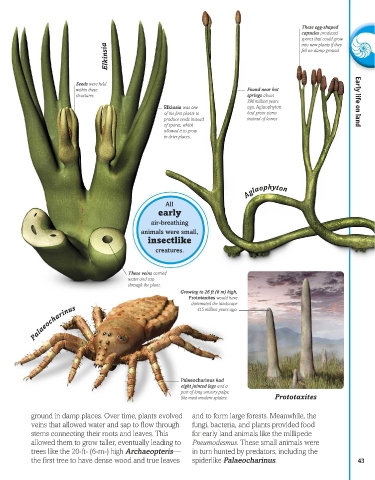
These egg-shaped
                                                                                                   capsules produced
                                                                                                   spores that could grow
                                                                                                   into new plants if they
                                    Elkinsia                                                       fell on damp ground.


                          Seeds were held
                          within these                                            Found near hot
                          structures.                                             springs about
                                                                                  396 million years                  Early life on land
                                                       Elkinsia was one           ago, Aglaophyton
                                                       of the first plants to     had green stems
                                                       produce seeds instead      instead of leaves.
                                                       of spores, which
                                                       allowed it to grow
                                                       in drier places.


                                                                                 Aglaophyton

                                                       All
                                                     early
                                                  air-breathing
                                               animals were small,
                                                 insectlike
                                                    creatures.


                                           These veins carried
                                           water and sap
                                           through the plant.
                                                            Growing to 26 ft (8 m) high,
                                                               Prototaxites would have
                                                               dominated the landscape
            Palaeocharinus
                                                                 415 million years ago.


                                                            Palaeocharinus had
                                                            eight jointed legs and a
                                                            pair of long sensory palps,
                                                            like most modern spiders.      Prototaxites


           ground in damp places. Over time, plants evolved     and to form large forests. Meanwhile, the
           veins that allowed water and sap to flow through     fungi, bacteria, and plants provided food
           stems connecting their roots and leaves. This        for early land animals like the millipede
           allowed them to grow taller, eventually leading to   Pneumodesmus. These small animals were
           trees like the 20-ft- (6-m-) high Archaeopteris—     in turn hunted by predators, including the
           the first tree to have dense wood and true leaves    spiderlike Palaeocharinus.                            43


   US_042-043_Early_life_on_land.indd   43                                                                       10/04/18   3:33 PM

