


Page 433 - (DK Eyewitness) Travel Guide - Spain
P. 433
INTRODUCING SE VILLE 431
0 metres 300
0 yards 300
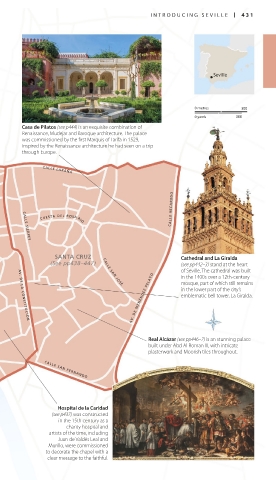
Casa de Pilatos (see p444) is an exquisite combination of
Renaissance, Mudejar and Baroque architecture. The palace
was commissioned by the first Marquis of Tarifa in 1529,
inspired by the Renaissance architecture he had seen on a trip
through Europe.
C AL L E AL FO N SO X II
CALLE LARAÑA
C A L L E S A N PA BLO CA LLE SI E RP ES C UE S TA D EL R O SA R I O CALLE RE C A R EDO
CA L L E TO R NE O
EL ARENAL
(See pp432–37)
SANTA CRUZ Cathedral and La Giralda
(See pp438–447) (see pp442–3) stand at the heart
of Seville. The cathedral was built
AV. D E ME NÉ NDE Z P E LAY O in the lower part of the city’s
in the 1400s over a 12th-century
mosque, part of which still remains
C ALL E AD R IA NO
C A L L E SA N J OS É
emblematic bell tower, La Giralda.
AV. D E LA C O N S T I T UCI ÓN
Guadalquivir
Real Alcázar (see pp446–7) is an stunning palace
PA S E O DE C R I S TÓ BAL C O LÓ N
built under Abd Al Roman III, with intricate
plasterwork and Moorish tiles throughout.
C AL LE SAN FE R N A NDO
Hospital de la Caridad
(see p437) was constructed
in the 15th century as a
charity hospital and
artists of the time, including
Juan de Valdés Leal and
Murillo, were commissioned
to decorate the chapel with a
clear message to the faithful.
430-431_EW_Spain.indd 431 26/09/17 11:55 am

