


Page 13 - Dog
P. 13
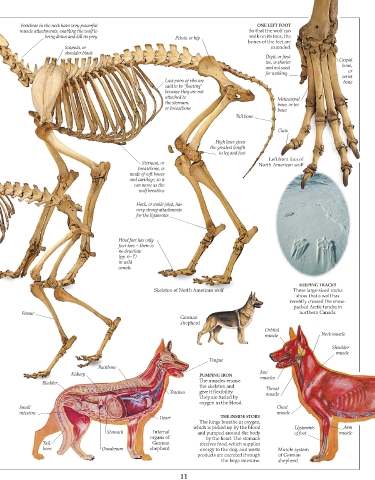
Vertebrae in the neck have very powerful                                     ONE LEFT FOOT
        muscle attachments, enabling the wolf to                                  So that the wolf can
                bring down and kill its prey              Pelvis, or hip          walk on its toes, the
                                                                                  bones of the feet are
                      Scapula, or                                                        extended.
                      shoulder blade
                                                                                        Digit, or first
                                                                                        toe, is shorter         Carpal
                                                                                        and not used             bone,
                                                                                        for walking                or
                                                                                                                 wrist
                                                       Last pairs of ribs are                                    bone
                                                       said to be “floating”
                                                       because they are not
                                                       attached to                          Metacarpal
                                                       the sternum,                         bone, or toe
                                                       or breastbone                        bone
                                                                              Tail bone

                                                                                            Claw
                                                                       High knee gives
                                                                      the greatest length
                                                                         to leg and foot
                                                                                         Left front foot of
                                               Sternum, or                            North American wolf
                                              breastbone, is
                                           made of soft bones
                                           and cartilage, so it
                                             can move as the
                                              wolf breathes

                                              Hock, or ankle joint, has
                                              very strong attachments
                                              for the ligaments


                                        Hind foot has only
                                        four toes – there is
                                        no dewclaw
                                        (pp. 6–7)
                                        in wild
                                        canids


                                                                                                   KEEPING TRACKS
                                                   Skeleton of North American wolf               These large-sized tracks
                                                                                                  show that a wolf has
                                                                                                recently crossed the snow-
                                                                                                 packed Arctic tundra in
        Femur                                                                                      northern Canada.
                                                            German
                                                            shepherd
                                                                                        Orbital
                                                                                        muscle            Neck muscle
                                                                                                             Shoulder
                                                                                                               muscle
                                                                     Tongue
                                 Backbone
                        Kidney                                    PUMPING IRON        Jaw
                                                                                      muscles
               Bladder                                            The muscles encase
                                                                  the skeleton and      Throat
                                                         Trachea  give it flexibility.   muscle
                                                                  They are fueled by
                                                                  oxygen in the blood.
       Small                                                                               Chest
       intestine                                                                           muscle
                                                     Heart               THE INSIDE STORY
                                                                  The lungs breathe in oxygen,
                                                                which is picked up by the blood   Ligaments      Arm
                                    Stomach        Internal       and pumped around the body     of foot        muscle
                                                  organs of         by the heart. The stomach
               Tail                                German         receives food, which supplies
               bone               Duodenum        shepherd        energy to the dog, and waste   Muscle system
                                                                  products are excreted through   of German
                                                                         the large intestine.  shepherd

                                                            11
                                            (c) 2011 Dorling Kindersley. All Rights Reserved.

