


Page 16 - Dog
P. 16
Sight and sound


                           Every domestic dog in the world,
                           whether it is a Pekingese (pp. 58–59) or a
                           Great Dane (pp. 56–57), has inherited the eyes
                           and ears of its wild ancestor, the wolf. All its senses
                           have evolved for being a social hunter of large prey, but                       HUNTING HORN
                           these senses have been adapted and developed in                        follow the sound of a horn as
                                                                                                   Hunting dogs are trained to
                           different breeds of dog by “artificial selection.” This                   well as the human voice.
                           means, for example, that in sight hounds (pp. 48–49),
                           such as greyhounds, puppies with particularly good
                           sight have been chosen over the centuries as future
                           breeders. These breeders then pass on the trait of good
                           sight to their puppies. So in the course of time,
                           greyhounds have developed even better sight than the
                           wolf. Wolves and domestic dogs cannot hear as well as                   DOG’S WHISTLE
                           some other carnivores, because they usually hunt at                      Most dogs will
                                                                                                    respond to the
                           dusk when sight is more important than hearing. Foxes,                 sound of a whistle.
                           however, hunt at night, and it is thought that their
                           sense of hearing is more acute than a wolf’s.


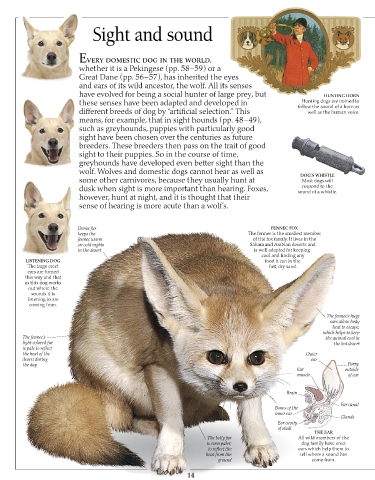
                          Dense fur                                                       FENNEC FOX
                          keeps the                                               The fennec is the smallest member
                          fennec warm                                               of the fox family. It lives in the
                          on cold nights                                           Sahara and Arabian deserts and
                          in the desert                                             is well adapted for keeping
                                                                                      cool and finding any
         LISTENING DOG                                                                  food it can in the
          The large erect                                                                hot, dry sand.
          ears are turned
         this way and that
         as this dog works
          out where the
           sounds it is
          listening to are
           coming from.
                                                                                                            The fennec’s huge
                                                                                                             ears allow body
                                                                                                              heat to escape,
                                                                                                          which helps to keep
        The fennec’s                                                                                       the animal cool in
        light-colored fur                                                                                     the hot desert
        is pale to reflect
        the heat of the                                                                              Outer
        desert during                                                                                  ear
        the day                                                                                                    Furry
                                                                                                  Ear             outside
                                                                                                  muscle           of ear


                                                                                               Brain
                                                                                                                Ear canal
                                                                                           Bones of the
                                                                                           inner ear
                                                                                                                Glands
                                                                                            Ear cavity
                                                                                            of skull
                                                                                                        THE EAR
                                                                     The belly fur                All wild members of the
                                                                     is even paler,                dog family have erect
                                                                     to reflect the               ears which help them to
                                                                    heat from the                  tell where a sound has
                                                                        ground                         come from.

                                                              14
                                            (c) 2011 Dorling Kindersley. All Rights Reserved.

