


Page 38 - Dog
P. 38
Feral dogs
           Pottery vessel – from the Colima
           culture in Mexico, a.d. 300–900 –
           of a hairless “techichi” dog
                                                              After the first dogs were domesticated
                                                              about 12,000 years ago, some of them, like the
                                                       dingo, eventually reverted to life in the wild. They are
                                                       known as “feral” dogs. They hunted for their own food
                                                       except when they could scavenge for a few scraps left
                                                       by human hunters. In many parts of the world, dogs
                                                        still live like this. Many populations of dogs live and
                                                        breed without any human contact at all. The most
                                                        successful of all feral dogs is the dingo of Australia, but
                                                        there are also feral dogs in India and many other parts
                                                        of Asia, where they are called “pariah” dogs – “pariah”
                                                               is a Tamil, or Sri Lankan, word meaning “outcast.”
                                                               All over Africa feral dogs live on the outskirts of
                                                               villages, where they serve a useful function in
                                                               cleaning up all the garbage. At times these dogs
                                                               are allowed into the houses, but they are seldom
                                                               given anything to eat because there is often not
                                                               enough food for the people, let alone the
                                                               animals. So the dogs must fend for themselves.


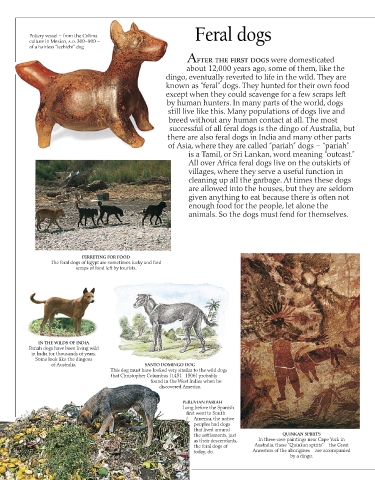
                            FERRETING FOR FOOD
                  The feral dogs of Egypt are sometimes lucky and find
                          scraps of food left by tourists.


              IN THE WILDS OF INDIA
          Pariah dogs have been living wild
           in India for thousands of years.
             Some look like the dingoes
                  of Australia.                 SANTO DOMINGO DOG
                                     This dog must have looked very similar to the wild dogs
                                     that Christopher Columbus (1451–1506) probably
                                                  found in the West Indies when he
                                                     discovered America.


                                                             PERUVIAN PARIAH
                                                             Long before the Spanish
                                                              first went to South
                                                                America, the native
                                                                peoples had dogs
                                                                that lived around
                                                                the settlements, just        QUINKAN SPIRITS
                                                                as their descendants,   In these cave paintings near Cape York in
                                                                the feral dogs of   Australia, these “Quinkan spirits” – the Great
                                                                today, do.          Ancestors of the aborigines – are accompanied
                                                                                                by a dingo.


                                            (c) 2011 Dorling Kindersley. All Rights Reserved.

