


Page 271 - (DK) Smithsinian - Military History: The Definitive Visual Guide to the Objects of Warfare
P. 271
269


                                BELOW DECK                                                                                              MIKASA


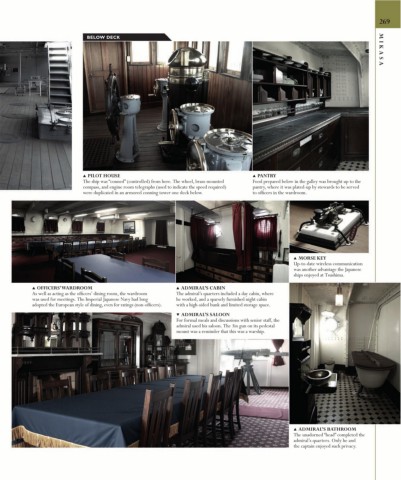
                              ▲ PILOT HOUSE                                                ▲ PANTRY
                              The ship was “conned” (controlled) from here.  The wheel, brass-mounted   Food prepared below in the galley was brought up to the
                              compass, and engine room telegraphs (used to indicate the speed required)   pantry, where it was plated-up by stewards to be served
                              were duplicated in an armored conning tower one deck below.   to officers in the wardroom.


                                                                                                          ▲ MORSE KEY
                                                                                                          Up-to-date wireless communication
                                                                                                          was another advantage the Japanese
                                                                                                          ships enjoyed at  Tsushima.


            ▲ OFFICERS’ WARDROOM                                ▲ ADMIRAL’S CABIN
            As well as acting as the officers’ dining room, the wardroom    The admiral’s quarters included a day cabin, where
            was used for meetings.  The Imperial Japanese Navy had long   he worked, and a sparsely furnished night cabin
            adopted the European style of dining, even for ratings (non-officers).  with a high-sided bunk and limited storage space.
                                                                ▼ ADMIRAL’S SALOON
                                                                For formal meals and discussions with senior staff, the
                                                                admiral used his saloon.  The 3in gun on its pedestal
                                                                mount was a reminder that this was a warship.


                                                                                                          ▲ ADMIRAL’S BATHROOM
                                                                                                          The unadorned “head” completed the
                                                                                                          admiral’s quarters. Only he and
                                                                                                          the captain enjoyed such privacy.

