


Page 25 - (DK Eyewitness) Travel Guide - India
P. 25
A POR TR AIT OF INDIA 23
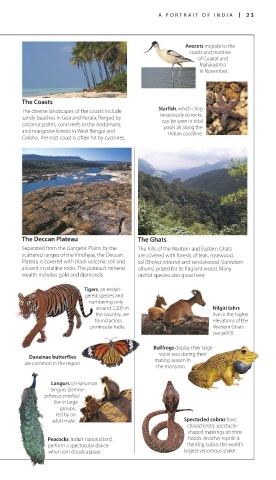
Avocets migrate to the
coasts and marshes
of Gujarat and
Maharashtra
in November.
The Coasts
The diverse landscapes of the coasts include Starfish, which cling
tenaciously to rocks,
sandy beaches in Goa and Kerala, fringed by can be seen in tidal
coconut palms, coral reefs in the Andamans, pools all along the
and mangrove forests in West Bengal and Indian coastline.
Odisha. The east coast is often hit by cyclones.
The Deccan Plateau The Ghats
Separated from the Gangetic Plains by the The hills of the Western and Eastern Ghats
scattered ranges of the Vindhyas, the Deccan are covered with forests of teak, rosewood,
Plateau is covered with black volcanic soil and sal (Shorea robusta) and sandalwood (Santalam
ancient crystalline rocks. The plateau’s mineral album), prized for its fragrant wood. Many
wealth includes gold and diamonds. orchid species also grow here.
Tigers, an endan-
gered species and
numbering only
around 2,200 in Nilgiri tahrs
the country, are live in the higher
found across elevations of the
peninsular India. Western Ghats
(see p653).
Bullfrogs display their large
vocal sacs during their
Danainae butterflies
are common in the region. mating season in
the monsoon.
Langurs or Hanuman
langurs (Semno
pithecus entellus)
live in large
groups,
led by an
adult male. Spectacled cobras have
characteristic spectacle-
shaped markings on their
Peacocks, India’s national bird, hoods. Another reptile is
perform a spectacular dance the king cobra, the world’s
when rain clouds appear. largest venomous snake.
022-023_EW_India.indd 23 26/04/17 11:42 am

