


Page 177 - (DK Eyewitness) Travel Guide: Japan
P. 177
K Y O T O CIT Y 175
Environs
Gem-like Murin-an to the
west of Nanzen-ji is the former
villa of Meiji-era statesman
Yamagata Aritomo. The garden’s
design makes good use of
water from the aqueduct. North
of Nanzen-ji, Eikan-do houses
an image of Amida Buddha in
the act of looking back over his
shoulder, a very unusual pose.
y Ginkaku-ji: the
Silver Pavilion
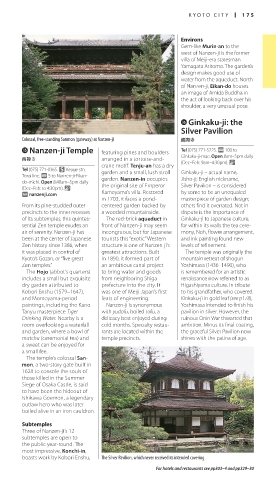
Colossal, free-standing Sanmon (gateway) at Nanzen-ji Ginkakuji Temple
t Nanzen-ji Temple featuring pines and boulders Tel (075) 771-5725. @ 100 to
arranged in a tortoise-and-
Nanzenji Temple Ginkaku-ji-mae. Open 8am–5pm daily
(Dec–Feb: 9am–4:30pm). &
crane motif. Tenju-an has a dry
Tel (075) 771-0365. Keage stn, garden and a small, lush stroll Ginkaku-ji – actual name,
Tozai line. @ 5 to Nanzen-ji-Eikan-
do-michi. Open 8:40am–5pm daily garden. Nanzen-in occupies Jisho-ji; English nickname,
(Dec–Feb: to 4:30pm). & the orig inal site of Emperor Silver Pavilion – is considered
∑ nanzenji.com Kame yama’s villa. Restored by some to be an unequaled
in 1703, it faces a pond- masterpiece of garden design;
From its pine-studded outer centered garden backed by others find it overrated. Not in
precincts to the inner recesses a wooded mountainside. dispute is the importance of
of its subtemples, this quintes- The red-brick aqueduct in Ginkaku-ji to Japanese culture,
sential Zen temple exudes an front of Nanzen-ji may seem for within its walls the tea cere-
air of serenity. Nanzen-ji has incongruous, but for Japanese mony, Noh, flower arrange ment,
been at the center of Japanese tourists this “exotic” Western and ink painting found new
Zen history since 1386, when structure is one of Nanzen-ji’s levels of refinement.
it was placed in control of greatest attractions. Built The temple was originally the
Kyoto’s Gozan, or “five great in 1890, it formed part of mountain retreat of shogun
Zen temples.” an ambi tious canal project Yoshimasa (1436–1490), who
The Hojo (abbot’s quarters) to bring water and goods is remembered for an artistic
includes a small but exquisite from neigh boring Shiga renaissance now referred to as
dry garden attributed to prefecture into the city. It Higashiyama culture. In tribute
Kobori Enshu (1579–1647), was one of Meiji Japan’s first to his grandfather, who covered
and Momoyama-period feats of engineering. Kinkaku-ji in gold leaf (see p178),
paintings, including the Kano Nanzen-ji is synonymous Yoshimasa intended to finish his
Tanyu masterpiece Tiger with yudofu, boiled tofu, a pavilion in silver. However, the
Drinking Water. Nearby is a delicacy best enjoyed during ruinous Onin War thwarted that
room over looking a waterfall cold months. Specialty restau- ambition. Minus its final coating,
and garden, where a bowl of rants are located within the the graceful Silver Pavilion now
matcha (cere monial tea) and temple precincts. shines with the patina of age.
a sweet can be enjoyed for
a small fee.
The temple’s colossal San-
mon, a two-story gate built in
1628 to console the souls of
those killed in the Summer
Siege of Osaka Castle, is said
to have been the hideout of
Ishikawa Goemon, a legendary
outlaw hero who was later
boiled alive in an iron cauldron.
Subtemples
Three of Nanzen-ji’s 12
subtemples are open to
the public year-round. The
most impressive, Konchi-in,
boasts work by Kobori Enshu, The Silver Pavilion, which never received its intended covering
For hotels and restaurants see pp303–4 and pp329–30
174-175_EW_Japan.indd 175 08/08/16 2:54 pm

