


Page 179 - (DK Eyewitness) Travel Guide: Japan
P. 179
K Y O T O CIT Y 177
aficionados) Oda Nobunaga Michizane, or Tenjin-
and Hideyoshi. Today, a host san, the deity of
of subtemples, many with learning. Michizane’s
famous tearooms and jewel- favorite tree, the
like gardens, continue to plum (ume), is found
pro mote the ways of Zen throughout the
and Tea. grounds. On the 25th
Daisen-in is famous for of each month, the
its Muromachi-period dry shrine is the site of a
garden. Ink landscape bustling flea-market,
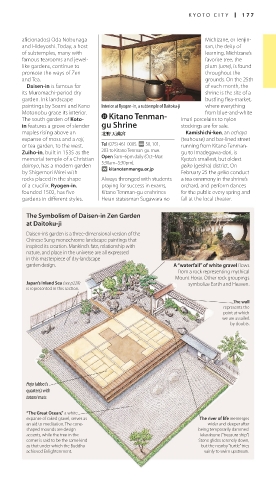
paintings by Soami and Kano Interior at Ryogen-in, a subtemple of Daitoku-ji where everything
Motonobu grace its interior. a Kitano Tenman- from blue-and-white
The south garden of Koto- Imari porcelains to nylon
in features a grove of slender gu Shrine stockings are for sale.
Kamishichi-ken, an ochaya
maples rising above an Kitano Tenman-gu
expanse of moss and a roji, (teahouse) and bar-lined street
or tea garden, to the west. Tel (075) 461-0005. @ 50, 101, running from Kitano Tenman-
Zuiho-in, built in 1535 as the 203 to Kitano Tenman-gu-mae. gu to Imadegawa-dori, is
memorial temple of a Christian Open 5am–6pm daily (Oct–Mar: Kyoto’s smallest, but oldest
daimyo, has a modern garden 5:30am–5:30pm). geiko (geisha) district. On
∑ kitanotenmangu.or.jp
by Shigemori Mirei with February 25 the geiko conduct
rocks placed in the shape Always thronged with stu dents a tea ceremony in the shrine’s
of a crucifix. Ryogen-in, praying for success in exams, orchard, and perform dances
founded 1502, has five Kitano Tenman-gu enshrines for the public every spring and
gardens in different styles. Heian statesman Sugawara no fall at the local theater.
The Symbolism of Daisen-in Zen Garden
at Daitoku-ji
Daisen-in’s garden is a three-dimensional version of the
Chinese Sung monochrome landscape paintings that
inspired its creation. Mankind’s fate, relationship with
nature, and place in the universe are all expressed
in this masterpiece of dry-landscape
garden design. A “waterfall” of white gravel flows
from a rock representing mythical
Mount Horai. Other rock groupings
Japan’s Inland Sea (see p228) symbolize Earth and Heaven.
is represented in this section.
The wall
represents the
point at which
we are assailed
by doubts.
Hojo (abbot’s
quarters) with
tatami mats
“The Great Ocean,” a white
expanse of raked gravel, serves as The river of life reemerges
an aid to meditation. The cone- wider and deeper after
shaped mounds are design being tem porarily dammed.
accents, while the tree in the Takarabune (“treasure ship”)
corner is said to be the same kind Stone glides serenely down,
as that under which the Buddha but the nearby “turtle” tries
achieved Enlightenment. vainly to swim upstream.
176-177_EW_Japan.indd 177 08/08/16 3:07 pm

