


Page 178 - (DK Eyewitness) Travel Guide: Japan
P. 178
176 JAP AN REGION B Y REGION
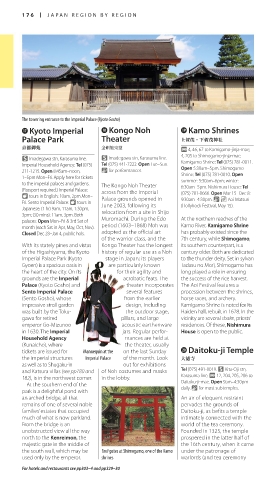
The towering entrance to the Imperial Palace (Kyoto Gosho)
u Kyoto Imperial i Kongo Noh o Kamo Shrines
Palace Park Theater
Imperial Park @ 4, 46, 67 to Kamigamo-jinja-mae;
Imadegawa stn, Karasuma line. Imadegawa stn, Karasuma line. 4, 205 to Shimogamo-jinja-mae.
Imperial Household Agency: Tel (075) Tel (075) 441-7222. Open Tue–Sun. Kamigamo Shrine: Tel (075) 781-0011.
211-1215. Open 8:45am–noon, & for performances. Open 5:30am–5pm. Shimogamo
1–5pm Mon–Fri. Apply here for tickets Shrine: Tel (075) 781-0010. Open
to the imperial palaces and gardens. The Kongo Noh Theater summer: 5:30am–6pm; winter:
(Passport required.) Imperial Palace: across from the Imperial 6:30am–5pm. Nishimura House: Tel
8 tours in English: 10am, 2pm Mon– Palace grounds opened in (075) 781-0666. Open Mar 15–Dec 8:
Fri. Sento Imperial Palace: 8 tours in 9:30am–4:30pm. & _ Aoi Matsuri
Japanese: (1 hr) 9am, 11am, 1:30pm, June 2003, following its (Hollyhock Festival, May 15).
3pm; (30 mins): 11am, 3pm. Both relocation from a site in Shijo
palaces: Open Mon–Fri & 3rd Sat of Muromachi. During the Edo At the northern reaches of the
month (each Sat in Apr, May, Oct, Nov). period (1603–1868) Noh was Kamo River, Kamigamo Shrine
Closed Dec 28–Jan 4, public hols. adopted as the official art has probably existed since the
of the warrior class, and the 7th century, while Shimogamo,
With its stately pines and vistas Kongo Theater has the long est its southern counterpart, is a
of the Higashiyama, the Kyoto history of regular use as a Noh century older. Both are dedi cated
Imperial Palace Park (Kyoto stage in Japan; its players to the thunder deity. Set in sylvan
Gyoen) is a spacious oasis in are particularly known Tadasu no Mori, Shimogamo has
the heart of the city. On its for their agility and long played a role in ensuring
grounds are the Imperial acrobatic feats. The the success of the rice harvest.
Palace (Kyoto Gosho) and theater incor porates The Aoi Festival features a
Sento Imperial Palace sev eral features procession between the shrines,
(Sento Gosho), whose from the earlier horse races, and archery.
impressive stroll garden design, including Kamigamo Shrine is noted for its
was built by the Toku- the out door stage, Haiden hall, rebuilt in 1628. In the
gawa for retired pillars, and large vicinity are several shake, priests’
emperor Go-Mizunoo acoustic earthenware residences. Of these, Nishimura
in 1630. The Imperial jars. Regular perfor- House is open to the public.
Household Agency mances are held at
(Kunaicho), where the theater, usually
tickets are issued for Mannequin at the on the last Sunday p Daitoku-ji Temple
the imperial structures Imperial Palace of the month. Look Daitokuji Temple
as well as to Shugaku-in out for exhibitions
and Katsura villas (see pp180 and of Noh cos tumes and masks Tel (075) 491-0019. Kita-Oji stn,
182), is in the northwest corner. in the lobby. Karasuma line. @ 12, 204, 205, 206 to
Daitoku-ji-mae. Open 9am–4:30pm
At the southern end of the daily. & for most subtemples.
park is a delightful pond with
an arched bridge, all that An air of eloquent restraint
re mains of one of several noble pervades the grounds of
families’ estates that occupied Daitoku-ji, as befits a temple
much of what is now park land. intimately connected with the
From the bridge is an world of the tea ceremony.
unobstructed view all the way Founded in 1325, the temple
north to the Kenreimon, the prospered in the latter half of
majestic gate in the middle of the 16th century, when it came
the south wall, which may be Torii gates at Shimogamo, one of the Kamo under the patronage of
used only by the emperor. shrines warlords (and tea ceremony
For hotels and restaurants see pp303–4 and pp329–30
176-177_EW_Japan.indd 176 08/08/16 4:26 pm

