


Page 64 - (DK Eyewitness) Travel Guide: Japan
P. 64
62 INTRODUCING JAP AN
needed for the nation to contend as
an imperial power equal with the West.
By the turn of the century, the
transformation to an industrial economy,
with textiles the chief export, was well under-
way. A second imperialist conflict, the Russo-
Japanese war of 1904–5, ended with Japan
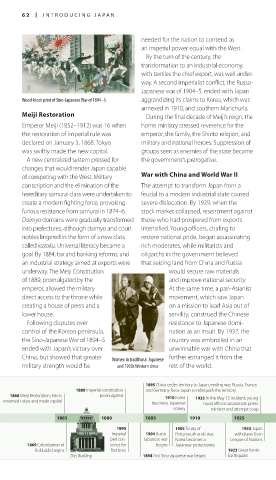
Wood-block print of Sino-Japanese War of 1894–5 aggrandizing its claims to Korea, which was
annexed in 1910, and southern Manchuria.
Meiji Restoration During the final decade of Meiji’s reign, the
Emperor Meiji (1852–1912) was 16 when home ministry stressed reverence for the
the restoration of imperial rule was emperor, the family, the Shinto religion, and
declared on January 3, 1868. Tokyo military and national heroes. Suppression of
was swiftly made the new capital. groups seen as enemies of the state became
A new centralized system pressed for the government’s prerogative.
changes that would render Japan capable
of competing with the West. Military War with China and World War II
conscription and the elimi nation of the The attempt to transform Japan from a
hereditary samurai class were undertaken to feudal to a modern industrial state caused
create a modern fighting force, provoking severe dislocation. By 1929, when the
furious resis tance from samurai in 1874–6. stock market collapsed, resentment against
Daimyo domains were gradually transformed those who had prospered from exports
into prefectures, although daimyo and court intensified. Young officers, chafing to
nobles lingered in the form of a new class restore national pride, began assassinating
called kazoku. Universal literacy became a rich moderates, while militarists and
goal. By 1884, tax and banking reforms, and oligarchs in the government believed
an industrial strat egy aimed at exports were that seizing land from China and Russia
underway. The Meiji Con stitution would secure raw materials
of 1889, pro mul gated by the and improve national security.
emperor, allowed the military At the same time, a pan-Asianist
direct access to the throne while movement, which saw Japan
creating a house of peers and a on a mission to lead Asia out of
lower house. servility, construed the Chinese
Following disputes over resistance to Japanese domi-
control of the Korean pen insula, nation as an insult. By 1937, the
the Sino-Japanese War of 1894–5 country was embroiled in an
ended with Japan’s victory over unwin nable war with China that
China, but showed that greater Women in traditional Japanese further estranged it from the
military strength would be and 1920s Western dress rest of the world.
1895 China cedes territory to Japan, ending war. Russia, France,
1889 Imperial constitution and Germany force Japan to relinquish the territory
1868 Meiji Restoration; Edo is promulgated 1910 Korea 1932 In the May 15 incident, young
renamed Tokyo and made capital becomes Japanese naval officers assassinate prime
colony minister and attempt coup
1865 1880 1895 1910 1925
1890 1905 Treaty of 1933 Japan
Imperial 1904 Russo- Portsmouth ends war. withdraws from
Diet con- Japanese war Korea be comes a League of Nations
1869 Colonization of venes for begins Japanese protectorate
Hokkaido begins first time 1923 Great Kanto
Diet Building 1894 First Sino-Japanese war begins Earthquake
062-063_EW_Japan.indd 62 08/08/16 2:53 pm

