


Page 32 - All About History - Issue 59-17
P. 32
FIGHT


          FOR YOUR

          RIGHTS


          Holmgang — a ritual duel —
          was the most effective way
          of settling disputes in the
          Viking Age

          For a society that had so much pride and honour
          at stake, Viking Age disputes could just as often
          be settled by a test of arms. Before the ritualised
          duelling of holmgang took off, Norsemen could
          settle their differences in a far less formal type of
          smackdown known as einvigi.
            With no rules or set weapons, no moderators
          and no set arena, einvigi (meaning ‘single combat’)
          could be called to settle beef or establish fault in
          some dispute, and offered a release valve from
          the self-destructive patterns of feud, raid and
          retaliation that could destroy whole communities.
          If someone was killed in a duel, their family would
          be paid weregeld (‘man price’) in compensation and
          the matter was considered settled.
            In an attempt to curb this bloodshed, the
          holmgang (meaning ‘island-going’) was introduced
          and with it strict rules that were set by the Thing.
   32     Of course the Norse world was a large one with
          communities settled in lands stretching from the
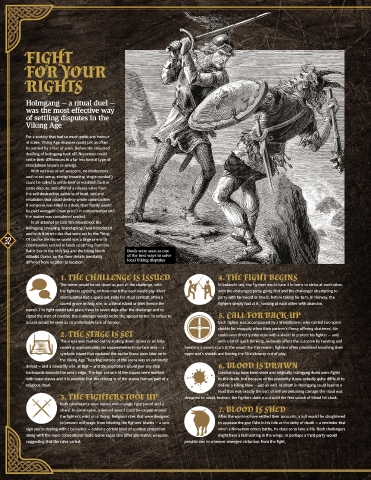
          Baltic Sea to the Irish Sea and the biting North   Duels were seen as one
          Atlantic Ocean, so the finer details inevitably   of the best ways to solve
          differed from location to location.  local Viking disputes

                      1. THE CHALLENGE IS ISSUED                              4. THE FIGHT BEGINS
                      The terms would be set down as part of the challenge, with   In Icelandic law, the fighters would take it in turns to strike at each other,
                      the fighters agreeing on how much the loser would pay. Most   with the challenged party going first and the challenger attempting to
                      communities had a space set aside for ritual combat, often a   parry with his sword or shield, before taking his turn. In Norway, the
                      sacred grove or holy site, or a literal island or islet (hence the   fighters simply had at it, hacking at each other with abandon.
          name). The fight would take place three to seven days after the challenge and to
          signal the start of combat, the challenger would recite the agreed terms. To refuse to   5. CALL FOR BACK-UP
          accept would be seen as an unthinkable lack of honour.              Each fighter was accompanied by a Shieldbearer, who carried two spare
                                                                              shields for resupply when their partner’s flimsy offering shattered. He
                      2. THE STAGE IS SET                                     could even directly intervene with a shield to protect his fighter — and,
                      The arena was marked out by staking down cloaks or ox hide   with a bit of quick thinking, seriously affect the outcome by twisting and
                      covering approximately six square metres in surface area — a   breaking a sword stuck in the wood. For this reason, fighters often prioritised smashing their
                      symbolic island that replaced the earlier literal ones later on in   opponent’s shields and forcing the Shieldbearer out of play.
                      the Viking Age. Treading outside of the arena was an automatic
          defeat — and a cowardly one, at that — and the spectators would jeer any step   6. BLOOD IS DRAWN
          backwards towards the area’s edge. The four corners of the square were marked   Combat may have been close and originally holmgang duels were fights
          with hazel staves and it is possible that the driving in of the stakes formed part of a   to the death, but because of the proximity it was actually quite difficult to
          religious ritual.                                                   deliver a killing blow — just as well, as death in Holmgang could lead to a
                                                                              feud that was exactly the sort of self-perpetuating carnage the ritual was
                      3. THE FIGHTERS TOOL UP                     designed to avoid. Instead, the fighters duke it out until the first splash of blood hit cloak.
                      Both combatants were issued with a single light sword and a
                      shield. In some cases, a second sword could be looped around   7. BLOOD IS SHED
                      the fighter’s wrist on a thong. Religious rites that were designed   After the warriors have settled their accounts, a bull would be slaughtered
                      to prevent evil magic from blunting the fighters’ blades — a sure   to appease the god Odin in his role as the deity of death — a reminder that
          sign you’re dealing with a berserker — added a certain level of spiritual protection   when a Norseman enters battle, he does so to take a life. Both challengers
          along with the more conventional tools. Some sagas also offer alternative weapons,   might have a bull waiting in the wings, or perhaps a third party would
          suggesting that the rules varied.                       provide one to whoever emerged victorious from the fight.

