


Page 135 - (DK Eyewitness) Travel Guide - Estonia Latvia & Lithuania
P. 135
A POR TR AIT OF LA T VIA 133
A PORTRAIT OF LATVIA
Lying between the other two Baltic States, Latvia is characterized by delightful
forests and lakes, fascinating historic towns and dynamic cities, which are, by
and large, unexplored. Nonetheless, the country’s exciting capital, Rīga, draws
hordes of Western Europeans throughout the year. The largest city in the Baltic
region, Rīga boasts a well-preserved Old Town packed with cultural treasures
and revels in its status as a hedonistic nightlife destination.
Long before the arrival of the German While still trying to come to terms with the
crusaders in 1201, local Latvian tribes had social, eco nomic and political legacies of
established trading links with merchants the 20th century, the country entered the
as far afield as Byzantium, while Orthodox 21st cen tury with confidence. The historic
Christianity had made inroads from the cores of Rīga and other major cities have
East. Yet, it was the crusaders who were been restored, while the rural areas are
responsible for ushering in eight centuries being developed for ecotourism.
of foreign domination. A short period
of self-determination in the early People
20th century ended with occupation first The most obvious ethnic divide is
by Nazi Germany and then by Soviet between the country’s Latvian and
Russia. The Soviet era brought rapid Russian communities, who make up
indust rialization, while the res toration of 60 and 30 per cent respectively of the
independence in 1991 further hastened country’s population of 2 million.
the pace of the country’s modernization. Although Russians form the majority in
Nonetheless, a distinctively Latvian culture Latvia’s major cities, a significant pro-
developed and survived, assimilating portion of them are not citizens, as they
foreign influences and substantial reg ional have not taken the mandatory language
differences. A connection with nature, and citizenship tests. They cannot vote
reflecting centuries of rural toil, has in national elections, nor are they allowed
remained intact at the same time. to travel and work freely in the EU.
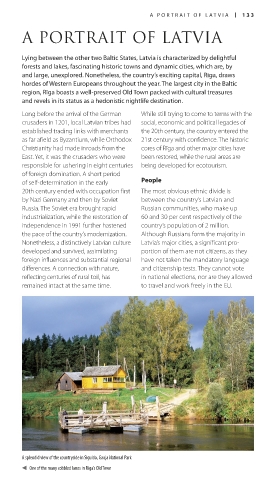
A splendid view of the countryside in Sigulda, Gauja National Park
One of the many cobbled lanes in Rīga’s Old Town
132-135.indd 133 15/02/17 10:20 am

