


Page 137 - (DK Eyewitness) Travel Guide - Estonia Latvia & Lithuania
P. 137
A POR TR AIT OF LA T VIA 135
general sense of scepticism
towards the political system.
The Soviet authorities took
a primarily agricultural
economy and transformed it
to one based largely around
heavy industry, with an
associated influx of Russian
workers into the cities. The
collapse of the Soviet planned
eco nomy between 1989 and
1992 meant a sudden loss of
markets for Latvia’s goods,
and the country was plunged
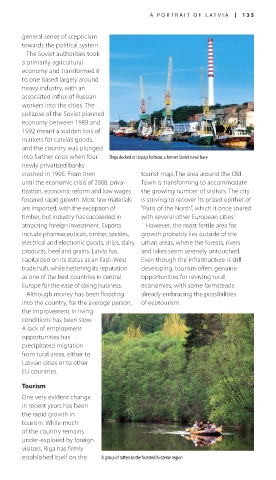
into further crisis when four Ships docked at Liepāja harbour, a former Soviet naval base
newly privatized banks
crashed in 1995. From then tourist map. The area around the Old
until the economic crisis of 2008, priva Town is transforming to accommodate
tization, economic reform and low wages the growing number of visitors. The city
fostered rapid growth. Most raw materials is striving to recover its prized epithet of
are imported, with the exception of “Paris of the North”, which it once shared
timber, but industry has succeeded in with several other European cities.
attracting foreign invest ment. Exports However, the most fertile area for
include pharmaceuticals, tim ber, textiles, growth probably lies outside of the
electrical and electronic goods, ships, dairy urban areas, where the forests, rivers
products, beef and grains. Latvia has and lakes seem serenely untouched.
capitalized on its status as an East–West Even though the infrastructure is still
trade hub, while bettering its reputation developing, tourism offers genuine
as one of the best countries in central opportunities for reviving rural
Europe for the ease of doing business. economies, with some farm steads
Although money has been flooding already embracing the possi bilities
into the country, for the average person, of ecotourism.
the improvement in living
conditions has been slow.
A lack of employment
opportunities has
precipitated migration
from rural areas, either to
Latvian cities or to other
EU countries.
Tourism
One very evident change
in recent years has been
the rapid growth in
tourism. While much
of the country remains
underexplored by foreign
visitors, Rīga has firmly
established itself on the A group of rafters in the forested Kurzeme region
132-135.indd 135 15/02/17 10:20 am

