


Page 209 - (DK Eyewitness) Travel Guide - Portugal
P. 209
itself, Santa Eufémia, dated
1551 above its decorative
doorway, has a Roman capital
used as a font.
13 "\
Conímbriga
! E3 ⌂ 2 km (1 mile)
S of Condeixa-a-Nova
§ 239 941 177 (museum)
@ From Coimbra # 10am–
7pm daily ¢ 1 Jan, 1 May,
Easter Sun, 25 Dec
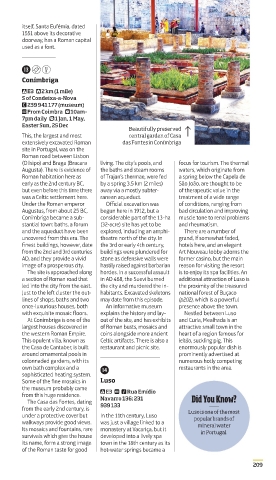
Beautifully preserved
This, the largest and most central garden of Casa
extensively excavated Roman das Fontes in Conímbriga
site in Portugal, was on the
Roman road between Lisbon
(Olisipo) and Braga (Bracara living. The city’s pools, and focus for tourism. The thermal
Augusta). There is evidence of the baths and steam rooms waters, which originate from
Roman habitation here as of Trajan’s thermae, were fed a spring below the Capela de
early as the 2nd century BC, by a spring 3.5 km (2 miles) São João, are thought to be
but even before this time there away via a mostly subter of therapeutic value in the
was a Celtic settle ment here. ranean aqueduct. treatment of a wide range
Under the Roman empe ror Official excavation was of conditions, ranging from
Augustus, from about 25 BC, begun here in 1912, but a bad circulation and improving
Conímbriga became a sub consider able part of the 13ha muscle tone to renal problems
stantial town: baths, a forum (32acre) site has yet to be and rheumatism.
and the aqueduct have been explored, inclu ding an amphi There are a number of
uncovered from this era. The theatre north of the city. In grand, if somewhat faded,
finest build ings, however, date the 3rd or early 4th cent ury, hotels here, and an elegant
from the 2nd and 3rd centuries buildings were plundered for Art Nouveau lobby adorns the
AD, and they provide a vivid stone as defensive walls were former casino, but the main
image of a prosperous city. hastily raised against barbarian reason for visiting the resort
The site is approached along hordes. In a successful assault is to enjoy its spa facilities. An
a section of Roman road that in AD 468, the Suevi burned additional attraction of Luso is
led into the city from the east. the city and murdered the in the proximity of the treasured
Just to the left cluster the out habitants. Excavated skeletons national forest of Buçaco
lines of shops, baths and two may date from this episode. (p202), which is a powerful
onceluxurious houses, both An informative museum presence above the town.
with exquisite mosaic floors. explains the history and lay Nestled between Luso
At Conímbriga is one of the out of the site, and has exhibits and Curia, Mealhada is an
largest houses discovered in of Roman busts, mosaics and attrac tive small town in the
the western Roman Empire. coins alongside more ancient heart of a region famous for
This opulent villa, known as Celtic artifacts. There is also a leitão, suckling pig. This
the Casa de Cantaber, is built restaurant and picnic site. enormously popular dish is
around orna mental pools in prominently advertised at
colonnaded gardens, with its numerous hotly competing
own bath com plex and a 14 restaurants in the area.
sophisticated heating system.
Some of the fine mosaics in Luso
the museum probably came ! E3 @ n Rua Emídio
from this huge residence. Navarro 136; 231 Did You Know?
The Casa das Fontes, dating
from the early 2nd century, is 939 133 Luso is one of the most
under a protective cover but In the 11th century, Luso popular brands of
walkways provide good views. was just a village linked to a mineral water
Its mosaics and fountains, rare monastery at Vacariça, but it in Portugal.
survivals which give the house developed into a lively spa
its name, form a strong image town in the 18th century as its
of the Roman taste for good hotwater springs became a
209
209
208-209_EW_Portugal.indd 209 20/09/2018 10:41

