


Page 17 - 02ed2018
P. 17
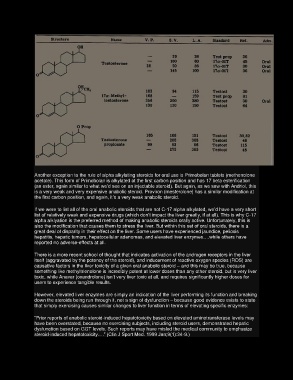
Another exception to the rule of alpha alkylating steroids for oral use is Primobolan tablets (methenolone
               acetate). This form of Primobolan is alkylated at the first carbon position and has 17 beta esterification
               (an ester, again similar to what we’d see on an injectable steroid). But again, as we saw with Andriol, this
               is a very weak and very expensive anabolic steroid. Proviron (mesterolone) has a similar modification at
               the first carbon position, and again, it’s a very weak anabolic steroid.

               If we were to list all of the oral anabolic steroids that are not C-17 alpha alkylated, we’d have a very short
               list of relatively weak and expensive drugs (which don’t impact the liver greatly, if at all). This is why C-17
               alpha alklyation is the preferred method of making anabolic steroids orally active. Unfortunately, this is
               also the modification that causes them to stress the liver. But within this set of oral steroids, there is a
               great deal of disparity in their effect on the liver. Some users have experienced jaundice, peliosis
               hepatitis, hepatic tumors, hepatocellular adenomas, and elevated liver enzymes….while others have
               reported no adverse-effects at all.


               There is a more recent school of thought that indicates activation of the androgen receptors in the liver
               itself (aggravated by the potency of the steroid), and inducement of reactive oxygen species (ROS) are
               causative factors in the liver toxicity of a given oral anabolic steroid – and this may be true, because
               something like methyltrienolone is incredibly potent at lower doses than any other steroid, but is very liver
               toxic, while Anavar (oxandrolone) isn’t very liver toxic at all, and requires significantly higher doses for
               users to experience tangible results.

               However, elevated liver enzymes are simply an indication of the liver performing its function and breaking
               down the steroids being run through it, not a sign of dysfunction – because good evidence exists to state
               that simply exercising causes similar changes to liver function in terms of elevating specific enzymes:

               “Prior reports of anabolic steroid-induced hepatotoxicity based on elevated aminotransferase levels may
               have been overstated, because no exercising subjects, including steroid users, demonstrated hepatic
               dysfunction based on GGT levels. Such reports may have misled the medical community to emphasize
               steroid-induced hepatotoxicity….” (Clin J Sport Med. 1999 Jan;9(1):34-9.)

