


Page 58 - Human Environment Interface (3)
P. 58
Brain Barrier Integrity and Development in the Rat

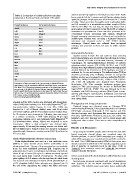
Table 3. Comparison of cellular adhesion transcripts                             solution was directly applied to choroid plexus tissue of the fourth
expressed at the blood-brain and blood-CSF barriers.                             brain ventricle, left for 5 minutes and cold fixative solution slowly
                                                                                 applied to plexuses. All plexuses were left in fixative for 2–3 hours
Present at plexus           Not present at plexus                                in fridge. Tissues were then thoroughly rinsed in phosphate buffer
                                                                                 and left overnight in a streptavidin-peroxidase complex (Vector
Amotl2                      Amot                                                 ABC kit PK-6100). The next day, the tissue was stained with a
Cdh5                        Amotl1                                               nickel-enhanced DAB reaction (Vector kit SK-4100) according to
Cgnl1                       Arhgap17                                             manufacturer’s specifications. Tissue was then processed as for
Cldn12                      Ash1l                                                conventional electron microscopy with osmium, dehydrated
Dlg1                        Cldn5                                                through increasing concentrations of ethanol and embedded in
Dlgap1                      Jam4                                                 araldite–epon. Sections were cut using a Reichard Ultracut E
Esam                        Mpp1                                                 microtome and examined under a LEO 912AB electron
F11r                        Tjap                                                 microscope. Control tissue was collected from un-injected
Jam2                        Tjp2                                                 embryos, was processed as above but gave no visible reaction
Lin7c                       Wnk1                                                 product.
Magi3
Marveld2                                                                         Immunohistochemistry
Mpp5                                                                                Sagittal sections through E15 and adult rat brain including
Mpp7
Ocln                                                                             lateral choroid plexus were selected from the collection of rat tissue
Pard3                                                                            at the Faculty of Health and Medical Sciences, University of
Pard6g                                                                           Copenhagen, for immunohistochemical detection of carbonic
Scrib                                                                            anhydrase-related protein VIII (CA8), SLC4A1 and CLIC3.
Tjp1                                                                             Sections were deparaffinised in xylene, rehydrated through graded
                                                                                 alcohols followed by treatments in 0.5% hydrogen peroxide in
Comparison of data presented in the current study on blood-CSF barrier           methanol for 15 min and rinsing in Tris-buffered saline (TBS) as
transcriptome and the previously published blood-brain barrier transcriptome     described previously [13]. Following removal of non-specific
[33]. Most (19 of 29) junction transcripts enriched at the blood-brain barrier   binding, sections were incubated in primary antibodies (SLC4A1,
were present at the blood-CSF barrier. Only one transcript thought to be brain-  8566-1-AP, 1:400; CLIC315971-1-AP, 1:200; or CA8, 12391-1-
barrier specific (Jam4) was not present at the blood-CSF barrier. Note that our  AP, 1:150. All antibodies were obtained from Proteintech,
data are from E15 rat choroid plexus, whereas blood-brain barrier [33] are from  Manchester, UK). After overnight incubation sections were
P2-8 mouse cerebral endothelial cells.                                           washed in TBS and incubated for 30 min in EnVisionTM+
doi:10.1371/journal.pone.0065629.t003                                            System/HRP (DAKO), K5007. This was followed by 6 min
                                                                                 incubation with DAB-chromogen solution (DAKO) and counter-
minutes) and the ABC reaction was developed with diaminoben-                     staining with Mayer’s haematoxylin, dehydrated and mounted
zidine (DAB)/nickel staining. One DAB tablet (SigmaFastTM 3,39-                  with DPX. Control sections contained no primary antibodies and
                                                                                 were always blank.
diaminobenzidine tablets, Sigma, St Lois, MO, USA) was
dissolved in 1 ml of filtered distilled water with 40 ml nickel                  Photography and image preparation
                                                                                    Digitized images were obtained using an Olympus DP70
ammonium sulphate, with the final solution used to incubate tissue
                                                                                 camera housing (Olympus, Tokyo, Japan) attached to an Olympus
for 10 minutes at room temperature. Following, tissue was moved                  BX50 light microscope (Olympus). A 106 eyepiece and 406
to a solution containing 1 DAB tablet (Sigma), 40 ml nickel                      objective lens were used. Raw image files were process in Adobe
ammonium sulphate and 1 urea hydroxide tablet (SigmaFastTM                       Photoshop CS5H (Adobe H Systems, San Jose, CA, USA). The
3,39-diaminobenzidine tablets, Sigma) and incubated at room                      brightness and curve functions were used to obtain images with
                                                                                 background close to white. There was no other manipulation of
temperature. When a dark precipitate was observed (after                         images.

approximately 10 minutes) the staining reaction was halted with                  Results and Discussion

filtered distilled water. Stained sections were mounted on silanized                Sequencing of total RNA samples collected from E15 and adult
                                                                                 lateral ventricular choroid plexus was completed using the
glass slides with fluorescent mounting media (DAKO) and dried at                 Illumina platform. A total of 29479 transcripts were mapped, of
4uC overnight.                                                                   which 5872 transcripts were enriched at E15 and 4781 enriched in
                                                                                 the adult. Over 18000 (approximately 60%) of these genes were
Biotin ethylenediamine, electron microscopy                                      already expressed at adult levels in E15 samples, suggesting a great
   Biotin-ethylenediamine was used as a low molecular tracer                     deal of maturity of expression levels in this tissue. Refer to
                                                                                 Table S1 (raw transcript count) and Table S2 (summarised
(286Da) to assess choroid plexus barrier permeability at an                      analysed data) for full dataset.
ultrastructural level. The use of this compound as a permeability
tracer has been established previously [24]. Pregnant rats at                    Genes associated with choroid plexus differentiation and
gestational day 15 were anaesthetised and embryos externalized.                  development
About 0.5 mL of tracer (0.2 mg/mL in saline) was slowly injected
into each lateral brain ventricle of embryos (n = 4) using a fine                   Several genes previously associated with neural development
glass capillary. At 5–8 minutes after the injection, the whole brain             were detected in the rat lateral ventricular choroid plexus
was removed and submerged in fixative (2.5% glutaraldehyde in                    epithelium. This included many transcription factors traditionally
pH7.4 phosphate buffer), before plexuses were dissected out. At
the end of the experiment, the mother was killed and tracer

PLOS ONE | www.plosone.org                                                       5 July 2013 | Volume 8 | Issue 7 | e65629

