


Page 65 - Human Environment Interface (3)
P. 65
Brain Barrier Integrity and Development in the Rat

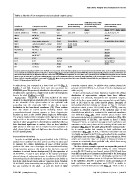
Table 5. Identity of ion transporter and associated enzyme genes.

                                                                                        Additional Genes with

                                                                        E15 Enriched Genes Unaltered Expression  Adult Enriched Genes
                                                                                                                 (from RNA-Seq)
Protein ID            Transport Function         Gene ID                (from RNA-Seq)  (from RNA-Seq)           Atp1a1, Atp1b1, Atp1b2, Atp1b3
Na+/K+ ATPase                                    Atp1b1                                                          2, 3, 4, 5b, 12, 13, 14
Carbonic anhydrase 2  Na+/K+                     Car2                   Car1, 8, 10     Atp1a3                   Slc12a2
NKCC1                 H+/HCO32 synthesis         Slc12a2                                Car6, 9                  Slc4a5
NBCe2                 Na+/K+/Cl2                 Slc4a5                                                          Slc9a6 (NHE6), Slc9a7 (NHE7)
NHE1                  Na+/HC032                  Slc9a1                 Slc9a5 (NHE5)   Slc9a1
NaBC1                                            Slc4a11                Slc4a3, Slc4a4                           Slc4a10
NBCn1                 cation proton antiporter   Slc4a7                 Slc4a4                                   Slc12a3
NCBE/NBCn2            sodium borate/HCO32/anion  Slc4a10                                                         Slc24a3
NCC                   Na+/HCO32                                                         Slc12a7                  Slc12a4 (KCC1)
                      Na+/HCO32/Cl2              Slc12a6                                                         Slc12a4 (KCC1)
KCC3                  Na+/Cl2                    Slc12a7                                                         Slc4a2
KCC4                  Na+/K+/Ca2+                Slc4a2
AE2                   K+/Cl2                     Slc4a1                 Slc4a1
AE1                   K+/Cl2
                      Cl2/HCO32
                      Cl2/HCO32

Enzymes and ion transporters known to be involved in CSF secretion. Protein ID from [72]; these ion transporters have been shown to be active in adult choroid plexus;
as an example the cellular localization of SLC4A1 is shown in Fig. 3C, D. Gene ID and function from NCBI (http://www.ncbi.nlm.nih.gov/gene). Genes in bold were not
detected in either RNA-Seq or Affymetrix datasets. Slc4a7 was only identified in Affymetrix. Slc12a2 (NKCC1) has previously been identified in embryonic mouse choroid
plexus as has Slc12a4 (KCC1) [110] and Slc4a10 (NCBE) [111]. Genes underlined have not previously been identified in rat choroid plexus (but cf. with mouse choroid
plexus [13]). A comprehensive list is presented in Table S2. Most of the genes listed here were identified in both RNA-Seq and Affymetrix datasets.
doi:10.1371/journal.pone.0065629.t005

in adult plexus, but expressed at a lower level at E15 (Fig. 2,         transcript reported above. In addition these authors showed the
Tables 5 and S2). However, there were also numerous ion                 presence of CLAUDIN-3, -4, -5, -9 and -19 in the developing and
transporter genes not previously identified in choroid plexus, some     adult rat [14].
of which were expressed at a higher level in E15 choroid plexus
than in the adult (Tables 5 and S2).                                       In the current study we chose instead to examine the cellular
                                                                        distribution of representative antigens from three different
  Aquaporins. Aquaporin-1 is the best studied of the water              categories: ion channels, transporters and associated enzymes.
channels in choroid plexus epithelial cells. It is located principally  Each of the three genes studied was expressed at a much higher
in the microvilli of the apical surface of the epithelial cells         level at E15 than in the adult choroid plexus. Examples of
protruding into the ventricular CSF. It also has a sparse               immunohistochemical staining are shown in Fig. 3. Carbonic
localisation in the baso-lateral membrane [78]. These authors           anhydrase-related protein VIII (CA8) shows a strong reactivity
have also shown in several species including human that                 localized to extended segments of the epithelial layer of the
immunohistochemical staining appears in these characteristic            choroid plexus, which is in contrast to the unstained vasculature
locations as soon as the choroid plexus begins to differentiate.        and fibroblasts (Fig. 3A). Adult choroid plexus lacked CA8
The present results confirm expression of the Aqp1 gene at least as     immunoreactivity both in epithelium and endothelium (Fig. 3B).
early as E15 in the rat choroid plexus. There have been several         Immunoreactivity of SLC4A1, also known as Band 3 Anion
reports of other aquaporins in choroid plexus epithelial cells, but     Transport Protein, is expressed strongly in both epithelium and
their functional significance is unclear. Here we have identified       vasculature in the entire plexus at E15 including all cell nuclei and
Aqp4 present at both ages but at a higher level of expression in        cytoplasm (Fig. 3C). In the adult plexus SlC4A1 immunoreactiv-
adult choroid plexus. Aqp3 and Aqp8 were also detected, but only        ity is mainly nuclear but varying in both epithelium and
in E15 choroid plexus.                                                  endothelium (Fig, 3D). CLIC3, a chloride intracellular channel
                                                                        3, is highly expressed in the E15 plexus, localized in the cytoplasm
Immunohistochemistry                                                    of epithelium and vasculature (Fig. 3E). In the adult plexus, blood
   In order to establish whether genes identified in the RNA-Seq        vessels and connective tissue are devoid of immunoreactivity in
                                                                        contrast to occasional plexus epithelial cells, which show strong
analysis were translated into their protein products we attempted       cytoplasmic staining (Fig. 3F).
to examine the cellular distribution of some of their protein
products. We chose not to investigate the immunohistochemistry             The three chosen examples represent an enzyme-like protein of
of tight junction genes in this study as this has been reported         still undefined biological function (CA8), an anion transport
elsewhere in rat and human development [14]: the expression of          protein (SLC4A1) and an ion channel protein (CLIC3) and show
CLAUDIN-1, -2 and -3 were shown in the lateral ventricular              very different patterns of immunoreactivity both in the developing
choroid plexus of embryonic human. In addition CLAUDIN-1                and adult choroid plexus. They are all strongly expressed at E15
immunoreactivity in the embryonic rat was shown to be similar to        but their cellular localization varies. In E15 plexus CA8 is confined
that in the adult (in agreement with our expression data). Similarly    to the epithelium, SLC4A1 is present in nuclei and cytoplasm of
CLAUDIN-2 immunoreactivity was negligible at E19 in the rat,            both epithelium and endothelium and CLIC3 is visible in
but was extensive in the adult – as were the levels of Cldn2            cytoplasm of all choroid plexus cells (Fig. 3). There is also a

PLOS ONE | www.plosone.org                                              12 July 2013 | Volume 8 | Issue 7 | e65629

