


Page 18 - Human Environment Interface (4)
P. 18
Brain Reading for Human-Machine Interfaces

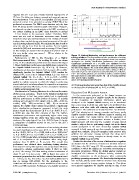
response time of 1:5 sec and a median maximal response time of        Figure 15. Method illustration and performance for different
15:3 sec. The difference between minimal and maximal response         training windows. The diagram illustrates the combination of training
time was between 7:4 sec and 19:1 sec (median 13:8 sec). A rest       time of two windows using the previously found clusters (see methods
period of at least 5 sec preceded on average 89 %+9 % of the          description for details), classification performance and statistics.
performed movements. For EMG onset detection only the data            Classification performance of a 5|2-fold cross validation for four
from M. biceps brachii contained usable information. However,         subjects quantified with mean BA and standard error is presented by
we observed a preload in muscle activity in the EMG recordings of     the dots in the diagram. The x-axis shows different training settings: A,
one subject resulting in an EMG onset detection at around             B, C – one training window per movement marker ending at different
{1:7 sec relative to the movement marker. Therefore, EMG              times with respect to the movement marker; A+A, B+B, C+C, A+B, B+C,
onset was not used to determine movement onset. Instead,              C+A – two training windows per movement marker, combined within
movement onset was estimated based on the analysis of motion          the same cluster or with other clusters. All – all 13 training windows
tracking data recorded during intentional movements of the right      were used to train a classifier.
arm in a study performed in [62]. We calculated the time it took to   doi:10.1371/journal.pone.0081732.g015
move the arm by 5 cm from the rest position. For the subjects
recorded in [62] such movement took on average 154 ms. Based          all 13 training windows was worse than that of the classifier trained
on this analysis, we assumed that the physical movement onset in      on the best pair of windows (All vs. B+C: pv0:001).
this very similar setup was around {150 ms relative to the
movement marker.                                                      Discussion: Dual BR Scenario Armrest
                                                                         In the experiments performed in the Armrest scenario we
   Performance of BR in the Detection of a Highly
Underrepresented State. The resulting BA values are shown             showed that our approach of classifier transfer for the detection
in Fig. 14. Best classification performance was obtained for subject  of the recognition of important information, which was
1. Mean classification performance was slightly lower compared to     developed in the Labyrinth Oddball scenario, can be transferred
the Labyrinth Oddball scenario (see Fig. 14 vs. Fig. 11). However,    into a new setup in which two tasks had to be performed that
classification performances between both scenarios did not differ     influence each other while still achieving similar classification
significantly [median for Labyrinth Oddball: 0:839, median for        performance. We confirmed our results from Part. ‘‘sec:BrioOdd-
Armrest: 0:791, mean ranks of Labyrinth Oddball: 6:2, mean ranks of   ball’’ that substitution of training examples and hence, partly
Labyrinth Oddball: 7:8, U~4, Z~{2:11, p~0:19, r~0:494].               classifier transfer between two different classes in training and
These results show that our classifier transfer approach can be       test is possible. Our results indicate that the supervision of
applied to realistic scenarios in which the subject is performing     trained operators in a teleoperation scenario is feasible, since
several tasks but is not always allowed to respond to an important    trained operators will miss only few examples of target stimuli
stimulus straight away. Moreover, we were successful in classifying   similar to subjects that are performing a simple task in the Armrest
a highly underrepresented class.                                      scenario (compared to the more demanding Labyrinth Oddball
                                                                      scenario). In both cases only very few examples for missed target
   Combination of Training Windows for a Robust Detection             stimuli were available. These few examples could not have been
of Movement Intention. Based on the statistical analysis that         sufficient for alternative training methods that allow direct
was performed to find time points which lead to significantly         training with few training examples as already shown for the
different performances to define borders of clusters, 13 training     Labyrinth Oddball setup (see [74]).
windows were grouped in three clusters: early [{600, {450] ms,
middle [{400, {250] ms and late [{200, {0] ms. Across all                Besides the detection of the success of information recognition
subjects, the middle cluster (cluster B) provided a significantly     we showed that the detection of movement intention based on
better classification performance compared to both the early          EEG data in the ERP range [75–78] is possible under dual task
(cluster A) and late cluster (cluster C): B vs. A: pv0:001, B vs. C:  conditions in which the subjects are not solely concentrating on
pv0:001 (see also first three columns of Fig. 15). Further,           movement preparation. Within the sliding window analysis we
classification performance was significantly higher when using        investigated the influence of different training windows for
training windows of the late cluster than when using training         classifier construction on the performance when continuously
windows of the early cluster (C vs. A: pv0:001). Figure 15 depicts    predicting upcoming movements. We found subject-independent
a comparison of classifiers trained on one, two or else all 13        time intervals, which provide different detection rates depending
training windows.                                                     on which interval the training window belongs to. This allows
                                                                      more general suggestions for classifier training on data of new
   Results showed that the combination of two training windows
increased classification performance (A+A vs. A: pv0:001, B+B
vs. B: pv0:001, C+C vs. C: pv0:001, A+B vs. A: pv0:001, B+C
vs. B: pv0:001, B+C vs. C: pv0:001, C+A vs. A: pv0:001, C+A
vs. C: pv0:001) except when combining training windows from B
and A in comparison to the performance when using single
windows from B (A+B vs. B: p~n:s:). The overall best
performance was obtained when combining training windows
from cluster B and C, although there was no significant difference
compared to window combinations within B (B+C vs. B+B:
p~n:s:). The average TPR from training window combination of
cluster B and C at time point {200 ms (latest time point of
movement preparation class and before estimated movement onset
at {150 ms, see Fig. 13 and Sec. ‘‘sec:ArmrestResultsBehavior’’)
was on average 0:85+0:066. For the application in the
exoskeleton this would mean a correct modulation of the control
in 85 out of 100 movements. Performance of a classifier trained on

PLOS ONE | www.plosone.org                                            16 December 2013 | Volume 8 | Issue 12 | e81732

