


Page 14 - Human Environment Interface (4)
P. 14
Brain Reading for Human-Machine Interfaces

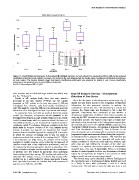
Figure 11. Classification performance in the Labyrinth Oddball scenario. For each subject for a window from 300 to 1000 ms the evaluated
classification performance and statistics are shown. The red lines in the main diagram mark the median values of obtained classification performances
for each subject. The inserted diagram shows that highest classification performance was obtained for subject 4 and 5 (mean classification
performance and standard error of mean (SEM) are depicted).
doi:10.1371/journal.pone.0081732.g011

since response time to individual target stimuli does widely vary     Dual BR Scenario Armrest – Simultaneous
(see Sec. ‘‘Behavior’’).                                              Detection of Two States

   Results of ML analysis finally show that early stimulus               Since the BR system in the teleoperation scenario (see Fig. 1)
processing in the time window 0–300 ms was not equally                should not only detect success in the recognition of important
important as EEG activity in the later time range (w300 ms)           information but also movement intention to optimize the
investigated here. However, early brain activity contributed as       exoskeleton’s control (see Sec. ‘‘Introducation’’), a second test
well. This might be caused by differences in attentional processes    scenario, the Armrest setup, was developed to test a dual BR
which have to be investigated in future experiments and analysis.     approach. Experiments were conducted to test whether a
                                                                      simultaneous classification of different brain states is possible by
   To summarize, from our results we conclude that brain activity     analyzing the EEG recorded in a complex scenario similar to the
evoked by infrequent, unimportant stimuli (standards) in the          teleoperation scenario. The Armrest setup copies a realistic dual-
investigated low frequency range is highly similar to brain activity  task situation that comes closer to the teleoperation scenario than
evoked by missed targets, which are important stimuli that were not   the dual task performed in the Labyrinth Oddball scenario (see Part
successfully processed, i.e., not recognized as important stimuli or  ‘‘Labyrinth Oddball Scenario – Recognition of Important Stimuli
completely missed. To substitute infrequent examples of the class     and Task Coordination Processes’’). That is because in the
missed targets by frequent examples of the class standards during     Armrest setup the user is not always able to respond to information
training is possible and supports our hypothesis that transfer        (responses to target events were not allowed during the rest period –
between classes is a feasible approach for applying BR in scenarios   see below) but has to postpone his response. This restriction was
in which the amount of training data is way too small to              most important to prove that our approach still works under
implement methods that can handle few training data [71–73] (for      realistic conditions in which two motor tasks may influence each
a brief discussion see [74]). Hence, the problem of few training      other, thus one task inhibits the execution of the other one.
examples in realistic scenarios can be solved by our approach of      Further, it is expected that trained operators of teleoperation
classifier transfer with a high classification performance, and can   scenarios have a low rate of missed targets. Hence, to investigate
be improved by choosing appropriate window combinations. The          whether it is indeed possible to detect very few instances of missed
choice of window, samples used for transfer and the combinations      targets by our approach, we designed a test scenario in which
of windows were first defined by knowledge about underlying           subjects would not miss too many target stimuli.
brain activity gained from average ERP analysis and confirmed by
systematic ML analysis. Hence, it is shown that average ERP              The Armrest setup can be described as follows: Participants of
analysis can be a useful method to choose appropriate training        the experiments wore a head-mounted display (HMD) and stood
data, especially if processes are involved that evoke pronounced      in a dimly lit room while performing a task in a virtual
patterns in the EEG like the P300.                                    environment. The task was to move the right arm from a rest

PLOS ONE | www.plosone.org                                            12 December 2013 | Volume 8 | Issue 12 | e81732

