


Page 24 - Human Environment Interface (4)
P. 24
Surface Chemistry Directs Protein Remodeling

dependent on the surface properties of materials, such as                   This work investigates matrix protein dynamics on FN-coated
wettability [9], surface chemistry and charge [12]. This evidence        mixed self-assembled monolayers (SAMs) of –OH and –CH3
raises the possibility that tissue compatibility of such materials may   terminated alkanethiols, which constitute an excellent model to
be connected with the allowance of cells to remodel surface              vary surface wettability in a broad range while maintaining
associated proteins presumably as an attempt to form their own           controlled and simple surface chemistry. SAMs are model organic
matrix. Much is known about the interactions between different           surfaces that provide defined chemical functionalities and well-
ECM proteins, but surprisingly less is our knowledge about the           controlled surface properties [22,23]. FN adsorption was investi-
ECM composition, organization, and stability at the materials            gated (adsorbed surface density, distribution and conformation)
interface.                                                               and correlated to cell behavior. Cell adhesion and signaling on
                                                                         FN-coated SAMs were characterized via the formation of focal
   ECM remodeling is a dynamic process which consists of two             adhesions, integrin expression and phosphorylation of FAKs. The
opposite events: assembly and degradation. These processes are           reorganization and secretion of FN was linked to the activity of FN
mostly active during development and regeneration of tissues but,        after adsorption on the different chemistries. Finally, the
when miss-regulated, can contribute to diseases such as athero-          expression (gene and protein) of MMP2 and MMP9 metallopro-
sclerosis, fibrosis, ischemic injury and cancer [13–16]. The             teinases was used to follow matrix degradation. This work provides
proteolytic cleavage of ECM components represents a main                 a broad overview of matrix remodeling at the cell-material
mechanism for ECM degradation and removal [17,18]. The                   interface, establishing correlations between surface chemistry, FN
major enzymes that degrade ECM and cell surface associated               adsorption, cell adhesion and signaling, matrix reorganization and
proteins are matrix metalloproteinases (MMPs). MMPs are a                degradation.
family (24 members) of zinc dependent endopeptidases, which
together with adamalysin-related membrane proteinases that               Results
contain disintegrin and metalloproteinase domains (ADAMs or
MDCs), such as thrombin, tissue plasminogen activator (tPA),             Fibronectin adsorption
urokinase (uPA) and plasmin are involved in the degradation of              The SAMs prepared in this work have been extensively used
ECM proteins. MMPs are either secreted or anchored to the cell
membrane by a transmembrane domain or by their ability to bind           and characterized in previous studies making use of XPS, FTIR
directly uPA receptor (uPAR) and integrin avb3 [19].                     and ellipsometry [24,25]. As a routine control, we have measured
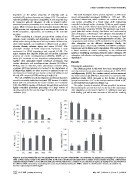
                                                                         the water contact angle (WCA) to assess that is in accordance with
   The role of MMPs in both development and diseases has been            published results. WCA decreases as the fraction of hydroxy
recently extensively studied and reviewed [20] because it is tightly     groups increases from 115u on the methyl terminated SAM to 20u
linked with the mechanisms for tumor invasion and metastasis             on the hydroxyl terminated one (Figure 1a).
[18]. Also, MMPs regulate cell behavior through finely tuned and
tightly controlled proteolytic processing of a large variety of             The surface density of adsorbed FN was quantified by western
signaling molecules that can also trigger beneficial effects in disease  blot analyzing the amount of protein remaining in the supernatant
resolution [21].                                                         after adsorption on the material surface. A calibration curve was
                                                                         built loading gels with known amounts of FN and the resulting

Figure 1. Surface wettability and FN adsorption on the CH3/OH mixed SAMs. The horizontal axis displays the percentage of OH groups in
SAMs. a) Water contact angle on the different SAMs. b) FN surface density after adsorption from a solution of concentration 20 mg/mL. c) Monoclonal
antibody binding for HFN7.1 on the different SAMs after FN adsorption from a solution of concentration 20 mg/mL. d) Activity of the adsorbed FN on
the different SAMs obtained by normalizing the monoclonal antibody binding for HFN7.1 relative to the FN surface density calculated in b).
doi:10.1371/journal.pone.0019610.g001

PLoS ONE | www.plosone.org                                               2 May 2011 | Volume 6 | Issue 5 | e19610

