


Page 41 - Human Environment Interface (4)
P. 41
Multi-Interface Domain Analysis

Table 4. Top ten multi-interface domains with the largest numbers of proteins.

Domain name                                                          # multi-interface proteins  avg # interfaces

Ig heavy chain variable domain, VH                                   43                          2.4(+0.7)
Ig light chain k variable domain, VL-k                               35                          2.5(+0.8)
Ig heavy chain c constant domain 1, CH1-c                            28                          2.3(+0.6)
Ig light chain k constant domain, CL-k                               18                          2.4(+0.6)
Hemoglobin, beta-chain                                               17                          2.8(+0.9)
Proteasome beta subunit (catalytic)                                  17                          7.6(+3.2)
T-cell antigen receptor                                              16                          3.1(+1.6)
Hemoglobin, alpha-chain                                              14                          3.1(+0.5)
Nucleoside diphosphate kinase, NDK                                   13                          2.9(+0.3)
Dodecameric ferritin homolog                                         12                          5.4(+1.4)

doi:10.1371/journal.pone.0050821.t004

interface proteins, we cannot get reasonable results from these two  besides a sufficient number of multi-interface proteins holding this
types of interactions.                                               domain.

Analysis on multiple interfaces within the same domain                 Fingerprints of interface. Given a set of multiple interfaces
   The top ten multi-interface domains with the largest numbers of   in a domain, we fish out interface-specific fingerprints by the
                                                                     mining of closed frequent subgraphs (substructures) from the
proteins are shown in Table 4. Unexpectedly, domains from the        corresponding interface graph database. These frequent substruc-
immune system have the most number of multi-interface proteins.      tures capture the natural organizations of interface residues. In the
This observation in part can be explained by the fact that a small   past, frequent sub-structures have been successfully applied to
portion of hypervariable regions exist in these proteins [48]. That  study protein structure and function [49].
is, although these proteins have the same domain, they do contain
different interfaces due to mutations occurring in the hypervari-       Our experiments on identifying interface fingerprints are
able regions.                                                        carried out on Ig VH domain and proteasome beta subunit
                                                                     domain separately. Generally, we obtained a great number of non-
   Table 4 also unveils the wide coverage of biological functions    trivial closed frequent substructures for each interface of the two
played by some domain. For example, the proteasome beta              domains. Full results are provided in Supplement Data S1. We
subunit (catalytic) domain has around seven different interfaces     then examine whether these graph patterns (fingerprints) are
which are involved in different biological processes. This is quite  domain-specific or not. To this end, we compared fingerprints
different from the Ig VH domain with the typical two interfaces      between interfaces in various dimensions. First, we directly
playing the Ig VL protein binding role and the role of antigen       compared residue composition of different interfaces. The detailed
recognition.                                                         results are shown in Figure 5 and Figure 6 for Ig VH domain and
                                                                     proteasome beta subunit domain, respectively. It is obvious that
   Since there are as many as 1,730 multi-interface domains—see      residue preferences are divergent for different interfaces. Second,
Figure 4 and Table 2—and exploring properties of every multi-        we explored fingerprint isomorphism between different interfaces.
interface domain is not our purpose in this study, we undertake      Not surprisingly, we identified just one isomorphic fingerprint
analysis on two domains: Ig VH domain and proteasome beta            between the interfaces of Ig VH domain and very few isomorphic
subunit domain. The former is contained in the largest number of     fingerprints between interfaces of proteasome beta subunit domain
multi-interface proteins and the latter has many binding sites

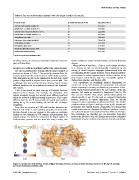
Figure 5. Amino acid distribution of the antigen-binding interface and the protein-binding interface in the Ig VH domain.
doi:10.1371/journal.pone.0050821.g005

PLOS ONE | www.plosone.org                                           7 December 2012 | Volume 7 | Issue 12 | e50821

