


Page 145 - The City and Guilds Textbook: Plumbing Book 1 for the Level 3 Apprenticeship (9189), Level 2 Technical Certificate (8202) and Level 2 Diploma (6035)
P. 145
Chapter 2 Common processes and techniques


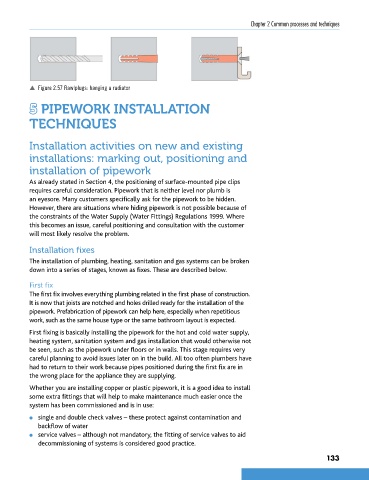
                p  Figure 2.57 Rawlplugs: hanging a radiator


                5 PIPEWORK INSTALLATION

                TECHNIQUES


                Installation activities on new and existing
                installations: marking out, positioning and

                installation of pipework
                As already stated in Section 4, the positioning of surface-mounted pipe clips
                requires careful consideration. Pipework that is neither level nor plumb is
                an eyesore. Many customers specifically ask for the pipework to be hidden.
                However, there are situations where hiding pipework is not possible because of
                the constraints of the Water Supply (Water Fittings) Regulations 1999. Where
                this becomes an issue, careful positioning and consultation with the customer
                will most likely resolve the problem.

                Installation fixes
                The installation of plumbing, heating, sanitation and gas systems can be broken
                down into a series of stages, known as fixes. These are described below.

                First fix
                The first fix involves everything plumbing related in the first phase of construction.
                It is now that joists are notched and holes drilled ready for the installation of the
                pipework. Prefabrication of pipework can help here, especially when repetitious
                work, such as the same house type or the same bathroom layout is expected.

                First fixing is basically installing the pipework for the hot and cold water supply,
                heating system, sanitation system and gas installation that would otherwise not
                be seen, such as the pipework under floors or in walls. This stage requires very
                careful planning to avoid issues later on in the build. All too often plumbers have
                had to return to their work because pipes positioned during the first fix are in
                the wrong place for the appliance they are supplying.

                Whether you are installing copper or plastic pipework, it is a good idea to install
                some extra fittings that will help to make maintenance much easier once the
                system has been commissioned and is in use:

                ●  single and double check valves – these protect against contamination and
                   backflow of water
                ●  service valves – although not mandatory, the fitting of service valves to aid
                   decommissioning of systems is considered good practice.

                                                                                                                133


        9781510416482.indb   133                                                                                    29/03/19   8:54 PM

