


Page 34 - The City and Guilds Textbook: Plumbing Book 1 for the Level 3 Apprenticeship (9189), Level 2 Technical Certificate (8202) and Level 2 Diploma (6035)
P. 34
The City & Guilds Textbook: Plumbing Book 1

                                            Working with lead

                                            As part of your job as a plumber, you may be asked to work with lead, whether
                                            it is replacing a lead pipe or installing lead sheet weatherings (sheet lead shaped
                                            and positioned on roofs and chimneys to prevent the rain getting in) and roof
                                            work. Lead is a highly toxic metal that can enter the body through:

                                            ●  absorption – touching and handling lead without the use of barrier cream
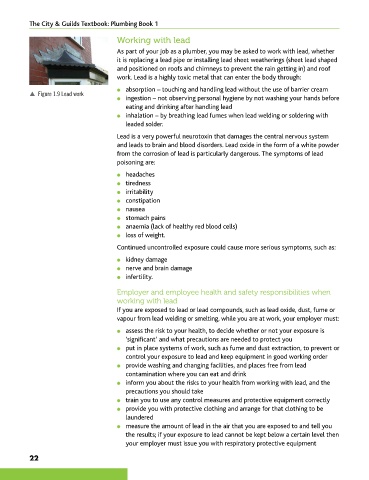
                p  Figure 1.9 Lead work
                                            ●  ingestion – not observing personal hygiene by not washing your hands before
                                               eating and drinking after handling lead
                                            ●  inhalation – by breathing lead fumes when lead welding or soldering with
                                               leaded solder.
                                            Lead is a very powerful neurotoxin that damages the central nervous system
                                            and leads to brain and blood disorders. Lead oxide in the form of a white powder
                                            from the corrosion of lead is particularly dangerous. The symptoms of lead
                                            poisoning are:

                                            ●  headaches
                                            ●  tiredness
                                            ●  irritability
                                            ●  constipation
                                            ●  nausea
                                            ●  stomach pains
                                            ●  anaemia (lack of healthy red blood cells)
                                            ●  loss of weight.

                                            Continued uncontrolled exposure could cause more serious symptoms, such as:
                                            ●  kidney damage
                                            ●  nerve and brain damage
                                            ●  infertility.


                                            Employer and employee health and safety responsibilities when
                                            working with lead
                                            If you are exposed to lead or lead compounds, such as lead oxide, dust, fume or
                                            vapour from lead welding or smelting, while you are at work, your employer must:
                                            ●  assess the risk to your health, to decide whether or not your exposure is
                                               ‘significant’ and what precautions are needed to protect you
                                            ●  put in place systems of work, such as fume and dust extraction, to prevent or
                                               control your exposure to lead and keep equipment in good working order
                                            ●  provide washing and changing facilities, and places free from lead
                                               contamination where you can eat and drink
                                            ●  inform you about the risks to your health from working with lead, and the
                                               precautions you should take
                                            ●  train you to use any control measures and protective equipment correctly
                                            ●  provide you with protective clothing and arrange for that clothing to be
                                               laundered
                                            ●  measure the amount of lead in the air that you are exposed to and tell you
                                               the results; if your exposure to lead cannot be kept below a certain level then
                                               your employer must issue you with respiratory protective equipment

                22


        9781510416482.indb   22                                                                                     29/03/19   8:49 PM

