


Page 40 - The City and Guilds Textbook: Plumbing Book 1 for the Level 3 Apprenticeship (9189), Level 2 Technical Certificate (8202) and Level 2 Diploma (6035)
P. 40
The City & Guilds Textbook: Plumbing Book 1

                                            ●  be used in temperatures as low as −30°C and as high as +150°C
                                            ●  have electrical resistance up to 440 V
                                            ●  be resistant against molten metal, marked as MM
                                            ●  be resistant against side squeeze, marked LD, for lateral deformation.
                                            Hard hats should be replaced once a year or if they have been struck by an
                                            object.

                                            Safety footwear
                                            You need to protect your feet against various hazards, including damp, cold,
                                            sharp objects, uneven ground and crushing. Flimsy footwear and ordinary
                                            trainers will not give the protection required. A good pair of boots with steel
                                            toecaps, EN 20345 (200 joules), and steel midsole for underneath protection is
                                            a mandatory requirement on construction sites.

                                            Overalls and work wear

                                            There are numerous types of clothing produced to wear over your normal
                                            clothes for protection from dust, dirt and grime. Some have protective kneepad
                                            provision, which is especially useful for plumbers, and are designed to last longer.
                                            Plumbers should always consider flame-retardant work wear where possible.

                                            High-visibility jackets and vests are now a mandatory requirement for all
                                            construction site workers. The usual colours are fluorescent yellow or orange.
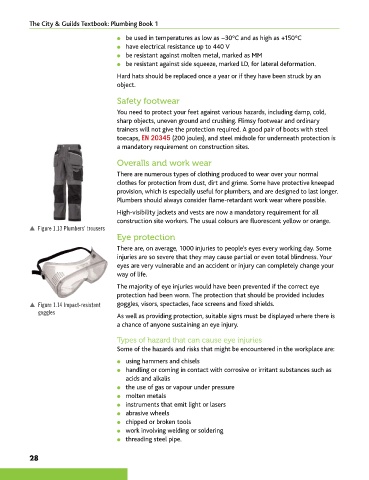
                p  Figure 1.13 Plumbers’ trousers
                                            Eye protection

                                            There are, on average, 1000 injuries to people’s eyes every working day. Some
                                            injuries are so severe that they may cause partial or even total blindness. Your
                                            eyes are very vulnerable and an accident or injury can completely change your
                                            way of life.
                                            The majority of eye injuries would have been prevented if the correct eye
                                            protection had been worn. The protection that should be provided includes
                p  Figure 1.14 Impact-resistant   goggles, visors, spectacles, face screens and fixed shields.
                   goggles
                                            As well as providing protection, suitable signs must be displayed where there is
                                            a chance of anyone sustaining an eye injury.

                                            Types of hazard that can cause eye injuries
                                            Some of the hazards and risks that might be encountered in the workplace are:

                                            ●  using hammers and chisels
                                            ●  handling or coming in contact with corrosive or irritant substances such as
                                               acids and alkalis
                                            ●  the use of gas or vapour under pressure
                                            ●  molten metals
                                            ●  instruments that emit light or lasers
                                            ●  abrasive wheels
                                            ●  chipped or broken tools
                                            ●  work involving welding or soldering
                                            ●  threading steel pipe.


                28


        9781510416482.indb   28                                                                                     29/03/19   8:49 PM

