


Page 64 - The City and Guilds Textbook: Plumbing Book 1 for the Level 3 Apprenticeship (9189), Level 2 Technical Certificate (8202) and Level 2 Diploma (6035)
P. 64
The City & Guilds Textbook: Plumbing Book 1
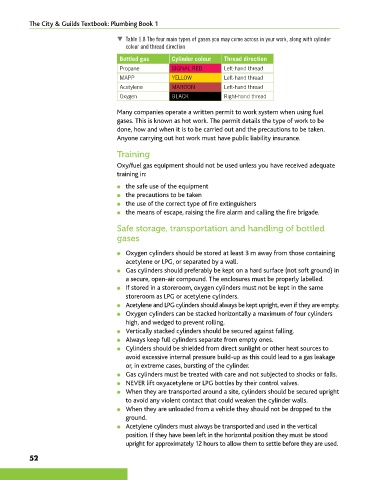
Table 1.8 The four main types of gases you may come across in your work, along with cylinder
colour and thread direction
Bottled gas Cylinder colour Thread direction
Propane SIGNAL RED Left-hand thread
MAPP YELLOW Left-hand thread
Acetylene MAROON Left-hand thread
Oxygen BLACK Right-hand thread
Many companies operate a written permit to work system when using fuel
gases. This is known as hot work. The permit details the type of work to be
done, how and when it is to be carried out and the precautions to be taken.
Anyone carrying out hot work must have public liability insurance.
Training
Oxy/fuel gas equipment should not be used unless you have received adequate
training in:
● the safe use of the equipment
● the precautions to be taken
● the use of the correct type of fire extinguishers
● the means of escape, raising the fire alarm and calling the fire brigade.
Safe storage, transportation and handling of bottled
gases
● Oxygen cylinders should be stored at least 3 m away from those containing
acetylene or LPG, or separated by a wall.
● Gas cylinders should preferably be kept on a hard surface (not soft ground) in
a secure, open-air compound. The enclosures must be properly labelled.
● If stored in a storeroom, oxygen cylinders must not be kept in the same
storeroom as LPG or acetylene cylinders.
● Acetylene and LPG cylinders should always be kept upright, even if they are empty.
● Oxygen cylinders can be stacked horizontally a maximum of four cylinders
high, and wedged to prevent rolling.
● Vertically stacked cylinders should be secured against falling.
● Always keep full cylinders separate from empty ones.
● Cylinders should be shielded from direct sunlight or other heat sources to
avoid excessive internal pressure build-up as this could lead to a gas leakage
or, in extreme cases, bursting of the cylinder.
● Gas cylinders must be treated with care and not subjected to shocks or falls.
● NEVER lift oxyacetylene or LPG bottles by their control valves.
● When they are transported around a site, cylinders should be secured upright
to avoid any violent contact that could weaken the cylinder walls.
● When they are unloaded from a vehicle they should not be dropped to the
ground.
● Acetylene cylinders must always be transported and used in the vertical
position. If they have been left in the horizontal position they must be stood
upright for approximately 12 hours to allow them to settle before they are used.
52
9781510416482.indb 52 29/03/19 8:50 PM

