


Page 228 - APPLIED PROCESS DESIGN FOR CHEMICAL AND PETROCHEMICAL PLANTS, Volume 1, 3rd Edition
P. 228
198                       Applied Process Design for Chemical  and  Petrochemical  Plants

                                   45
                                             I   I          I   I
                                             10  Hp.'\      15  Hp.
                                                               I  "l
                                   40             '\        I                 Size  Pump'. IO"X  8"   -
                                                                              Speed:  860  Rpm.
                                                    '\I'\.   Efficiency "-."'
                                                      '\   10 � -  7_o  --....._  -,
                                   35                  I'\._    I   i-.00,
                                                                     /
                                      12" Dia.  Impeller,  New  Condition �    /,'   1  ,operating  Points  with
                                                       ·r
                                     Possible  Opttalion ott-l--!-S:::::�  �-}-  � ew  1lmp � lle � H   1   1
                                      Worn  Impeller   I  ��  ::::-hJ.           I
                                                                  ""'1,..,......_
                                                     e q'
                                                          I
                                 .!:              I.���  • ;:�,   � -Operating  Points,with  Worn  Impeller
                                 ..,
                                  : 25           ""''  •\\�   '.#'   I   ......   --
                                                   �   �
                                 ::c            %    \<>�.             N  <, <,
                                                                               < r-,
                                  c,          <y\l\   11t"r   I     I             ._   ... ,.
                                            \e\l'l � e\l'I  �,.   Suction  plus  Discharge  Friction   ·, .........
                                 �  20
                                     .---""-1�Jr  I  I
                                     '""::::;; �  System  Static  Head
                                    15
                                    10
                                    5 o   200   400   600   800   1,000   1,200   1,400   1,600   1,800  2,000  2,200
                                                             Capacity, Gpm.
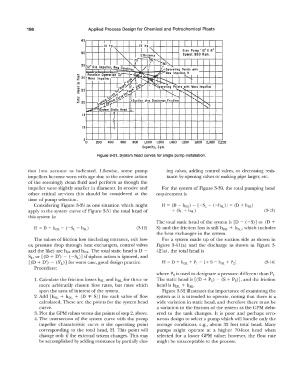
                                          Figure 3-51. System head curves for single pump installation.
             tion  into  account  as  indicated.  Likewise,  some  pump   ing  valves,  adding  control valves,  or decreasing  resis-
             impellers become worn with age due to the erosive action   tance by opening valves or making pipe larger,  etc.
             of the  seemingly  clean fluid and  perform  as  though  the
             impeller were slightly smaller in diameter.  In erosive and   For the system of Figure 3-39,  the total pumping head
             other  critical  services  this  should  be  considered  al  the   requirement is
             time of pump selection.
               Considering Figure  3-39  as  one situation which  might   H  =  (D  +  hod  - [-SL+ (-hsLJJ  =  (D  +  hod
             apply to the system  curve of  Figure  3-51  the total head of   +  (SL+ hsd                       (3-13)
             this system is:
                                                                   The total  static head of the  system is  [D  - (-S)]  or (D +
               H  = D  +  hoL  - (-SL  - hsd              (3-12)   S)  and  the friction loss  is still  hoL  +  hsL,  which includes
                                                                   the heat exchanger in the system.
               The values of friction loss  (including entrance,  exit loss-   For a system  made  up  of the  suction side as shown  in
             es,  pressure  drop  through  heat exchangers,  control  valves   Figure  3-41 (a)  and  the  discharge  as  shown  in  Figure  3-
             and the like)  are hsL  and hoL·  The total static head is D  -   42(a), the total head is
             SL,  or [ (D +  D')  - (-SL)]  if  siphon action is ignored, and
             [ (D +  D')  - (S'  L)] for worst case, good design practice.                                      (3-14)
               Procedure:
                                                                   where P2  is used to designate a pressure different than P1.
                1. Calculate the friction losses hsL and hoL for three or   The static head is  [ (D +  P1)  - (S +  P2)], and the friction
                  more  arbitrarily  chosen  flow  rates,  but rates  which   head is hoL  +  hsL·
                  span the area of interest of the system.           Figure 3-52 illustrates the importance of  examining the
               2. Add  [hsL  +  hoL  +  (D  =  S)]  for each value  of flow   system  as it is  intended  to  operate,  noting that there  is  a
                  calculated. These are the  points for the system head   wide variation in static head, and therefore there must be
                  curve.                                           a variation in  the friction of the system as  the GPM deliv-
               3.  Plot the GPM values versus the points of  step 2, above.   ered  lo  the  tank  changes.  It is  poor  and  perhaps  erro-
               4.  The intersection  of the  system  curve  with  the  pump   neous design  to select a  pump which will handle only  the
                  impeller  characteristic  curve  is  the  operating  point   average  conditions,  e.g.,  about 32  feet total  head.  Many
                 corresponding  to  the  total  head,  H.  This  point will   pumps  might  operate  at  a  higher  70-foot  head  when
                  change only if the external  system changes.  This  may   selected  for  a  lower  GPM  value;  however,  the  flow  rate
                  be accomplished by adding resistance by partially dos-   might be unacceptable to the process.

