


Page 486 - APPLIED PROCESS DESIGN FOR CHEMICAL AND PETROCHEMICAL PLANTS, Volume 1, 3rd Edition
P. 486
452                       Applied Process Design for Chemical  and Petrochemical  Plants

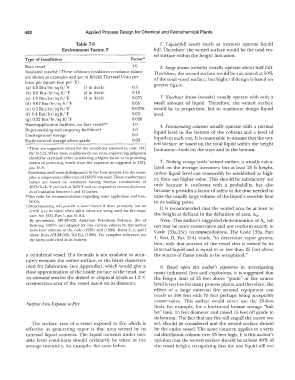
                                 Table 7-8                          1.  Liquid-full  vessels  (such  as  treaters)  operate  liquid
                           Environment Factor,  F                full. Therefore,  the wetted surface would be the total ves-
                                                                 sel  surface within the height limitation.
           Type of Installation                         Factor*
            Bare vessel                                 1.0         2.  Surge  drums (vessels)  usually operate about half full.
            Insulated vessels+  (These arbitrary insulation condance values   Therefore, the wetted surface would be calculated at 50%
            are shown as  examples  and are in British Thermal  Units per   of the total vessel surface, but higher if  design is based on
            hour per square foot per °F)                         greater figure.
            (a)  4.0 Btu/hr/sq ft/°F   (I  in thick)    0.3
            (b)  2.0 Btu/hr/sq ft/°F   (2 in thick)     0.15
            (c)  1.0  Btu/hr/sq ft/°F   (4 in thick)    0.075       3.  Knockout drums  (vessels)  usually operate with  only a
            (d)  0.67 Btu/hr/sq ft/°F                   0.05     small  amount  of liquid.  Therefore,  the  wetted  surface
            (e)  0.5 Btu/hr/sq ft/°F                    0.0376   would  be  in  proportion,  but to  maximum  design  liquid
            (f)  0.4 Btu/hr/sq ft/°F                    0.03     level.
            (g)  0.32 Btu/hr  I  sq ft/  °F             0.026
            'Nater-application facilities,  on bare vessel**   1.0   4.  Fractionating columns usually  operate  with  a  normal
            Depressurizing and emptying facilitiestt     1.0      liquid  level  in  the  bottom  of the  column  and  a  level  of
            Underground storage                         0.0       liquid on each tray.  It is reasonable to assume that the wet-
            Earth-covered storage above grade           0.03
                                                                  ted surface be based on the total  liquid within the height
             *These  are  suggested values  for the conditions  assumed  in  code  [33]   limitation-both  on the trays  and in the bottom.
             Par D 5.21. When these conditions do not exist, engineeringjudgment
             should be exercised either in selecting a  higher factor or in providing
             means  of protecting vessels  from  fire  exposure  as  suggested  in  [33],   5.  Working storage  tanks'  wetted surface is usually  calcu-
             par.  D.  8.                                         lated  on  the  average  inventory,  but at least 25  ft  height,
             +Insulation shall resist dislodgement by fire hose streams. For the exam-   unless  liquid level  can  reasonably  be established as  high-
             ples, a  temperature difference of 1600°:F was used. These conductance   er,  then use  higher value. This should be satisfactory  not
             values  are  based  on  insulation  having  thermal  conductivity  of
             48TS/hr-ft-°F per inch at 1600°F and correspond to various  thickness-   only  because  it  conforms  with  a  probability,  but  also
             es of insulation between  l  and 12 inches.          because it provides a factor of safety in the time needed to
            **See code for recommendations regarding water application  and insu-   raise the usually large volume of the liquid's sensible heat
             lation.                                              to its  boiling point.
            +rDcpressurtztng will  provide  a  lower factor if done  promptly,  but no   It is  recommended  that the wetted area  be  at least to
             credit is  to be  taken  when  safety  valves  are  being sized  for fire  expo-
             sure.  See  [33], Pan i. par.  D.  8.2.              the height as defined in the definition of area, A.v-
             By  permission,  API-RP-520,  American  Petroleum  Institute,  Div.  of   Note: This author's suggested determination of Aw  val-
             Refining  (1967)  and  adapted for  this  current edition  by  this  author   ues may be more conservative and not conform exactly  to
             from  later editions of the  code  (1976)  and  (1990). Items d,  e,  and f   Code  [33a.33c]  recommendations.  The  Code  [33a,  Part
             above  from API-RP-520,  5th  Ed.  (1990). For complete  reference,  see
              the latest code cited in its entirety.              1, Sect D,  Par.  D.4]  reads,  "to  determine  vapor  genera-
                                                                  tion,  only  that portion  of the vessel  that is  wetted  by  its
                                                                  internal  liquid and is  equal  to  or less  than 25  feet above
            a  cylindrical  vessel.  If a  formula  is  not available  to  accu-   the source of flame needs to be recognized."
            rately estimate the wetted surface, or the blank diameters
            used for fabrication  (see Appendix), which would give  a   6.  Based  upon  this  author's  experience  in  investigating
            close approximation of the inside surface of the head, use   many  industrial  fires  and  explosions,  it is  suggested  that
            an estimated area for the dished or elliptical heads as  1.2  X   the  height limit of 25  feet above  "grade"  or fire  source
            cross-section area of the vessel  based on its diameter.   level is too low for many process plants,  and therefore, the
                                                                  effect  of a  large  external  fire  around  equipment  can
                                                                  reach  to  I 00  feet with  75  feet perhaps  being  acceptably
                                                                  conservative.  This  author  would  never  use  the  25-foot
            Surface Area Exposed  to Fire
                                                                  limit,  for example,  for a  horizontal  butane  storage  "bul-
                                                                  let"  tank,  15 feet diameter and raised  15 feet off grade to
                                                                  its bottom. The fact that any fire will engulf the entire ves-
              The  surface  area  of a  vessel  exposed  to  fire  which  is   sel,  should be  considered and  the wetted surface should
            effective  in  generating  vapor  is  that  area  wetted  by  its   be  the entire vessel. The same concern  applies  to a verti-
            internal  liquid  contents.  The  liquid  contents  under vari-   cal distillation column over 25 feet high. It is this author's
            able  level  conditions  should  ordinarily  be  taken  at  the   opinion that the wetted surface should be at least 80%  of
            average inventory,  for example:  See note below.     the vessel  height,  recognizing that the tray liquid will wet

