


Page 198 - Towards_a_New_Malaysia_The_2018_Election_and_Its_6146371_(z-lib.org)
P. 198
Women in Malaysian Islamist Politics                         183

                  Dr Mariah.  is is ironic, because it was Mariah’s popularity—resulting in
                  a record-breaking victory in 2013—that convinced the Amanah leadership
                  that Kota Raja was the ultimate ‘safe seat’ for their president. Dr Mariah did
                  not object. She had even suggested it herself, contemplating that a step down
                  might be good for her after ten years in parliament. Seri Serdang, meanwhile,
                  was a seat she was con dent to win (rightly so, it turned out). She did, however,
                  acknowledge that replacing her in the more prestigious parliamentary seat
                  of Kota Raja sent a bad message to the members of the new party’s active
                  women’s branch, Wanita Amanah, which she led. While the reluctance to  eld
                  women in safe or high-status seats constitutes a real constraint—a point I will
                  return to below—it is important also not to be overly  xated on numbers
                  and outcomes. Candidates who lose their bid, or who are ‘demoted’, are not
                  necessarily without in uence and, as I will show, there is value in re ecting on
                  their campaigns and strategies.

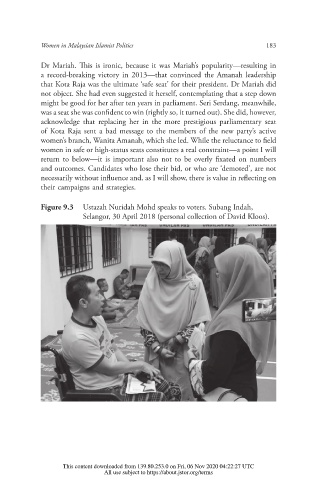
                  Figure 9.3  Ustazah Nuridah Mohd speaks to voters. Subang Indah,
                              Selangor, 30 April 2018 (personal collection of David Kloos).


                        This content downloaded from 139.80.253.0 on Fri, 06 Nov 2020 04:22:27 UTC
                                   All use subject to https://about.jstor.org/terms

