


Page 760 - (ISC)² CISSP Certified Information Systems Security Professional Official Study Guide
P. 760
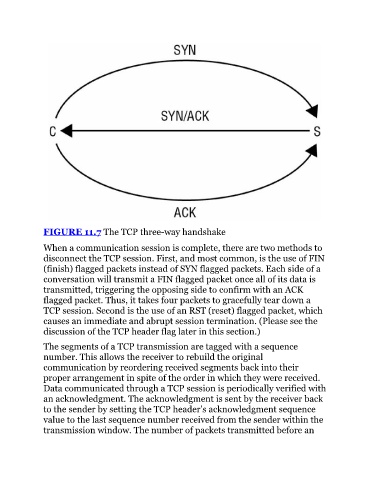
FIGURE 11.7 The TCP three-way handshake

               When a communication session is complete, there are two methods to
               disconnect the TCP session. First, and most common, is the use of FIN

               (finish) flagged packets instead of SYN flagged packets. Each side of a
               conversation will transmit a FIN flagged packet once all of its data is
               transmitted, triggering the opposing side to confirm with an ACK
               flagged packet. Thus, it takes four packets to gracefully tear down a
               TCP session. Second is the use of an RST (reset) flagged packet, which
               causes an immediate and abrupt session termination. (Please see the

               discussion of the TCP header flag later in this section.)

               The segments of a TCP transmission are tagged with a sequence
               number. This allows the receiver to rebuild the original
               communication by reordering received segments back into their
               proper arrangement in spite of the order in which they were received.
               Data communicated through a TCP session is periodically verified with

               an acknowledgment. The acknowledgment is sent by the receiver back
               to the sender by setting the TCP header’s acknowledgment sequence
               value to the last sequence number received from the sender within the
               transmission window. The number of packets transmitted before an

