


Page 62 - Fisika Terapan for Engineers and Scientists
P. 62
262                                CHAPTER 8  Conservation of Energy


                 *17. The force between two inert-gas atoms is often described by a  23. According to theoretical calculations, the potential energy
                    function of the form                                 of two quarks (see the Prelude) separated by a distance r is
                                                                                              24
                                          13     7                       U   r, where     1.18   10 eV/m. What is the force
                                   F   Ax     Bx
                                    x
                                                                         between the two quarks? Express your answer in newtons.
                    where A and B are positive constants and x is the distance
                    between the atoms. What is the corresponding potential-
                    energy function, called the Lennard–Jones potential?  8.2 The Cur ve of Potential Energy
                 *18. A particle moving in three dimensions is confined by a force  24. The potential energy of a particle moving along the x axis is
                    F   k (xi  yj  zk), where k is a constant. What is the work  U (x)   2x   x , where x is measured in meters and the
                                                                                 4
                                                                                     2
                    required to move the particle from the origin to a point r  xi    energy is measured in joules.
                    yj  zk?  What is the potential-energy function?
                                                                         (a) Plot the potential energy as a function of x.
                **19. Mountain climbers use nylon safety rope whose elasticity plays
                                                                         (b) Where are the possible equilibrium points?
                    an important role in cushioning the sharp jerk if a climber falls
                    and is suddenly stopped by the rope.                 (c) Suppose that E   0.050 J. What are the turning points
                                                                            of the motion?
                    (a) Suppose that a climber of 80 kg attached to a 10-m rope
                       falls freely from a height of 10 m above to a height of 10  (d) Suppose that E   1.0 J. What are the turning points of
                       m below the point at which the rope is anchored to a  the motion?
                       vertical wall of rock. Treating the rope as a spring with k  25. In Example 4, we determined the turning point for a bungee
                               3
                         4.9   10 N/m (which is the appropriate value for a  jump graphically and numerically. Use the data given in this
                       braided nylon rope of 9.2 mm diameter), calculate the  example for the following calculations.
                       maximum force that the rope exerts on the climber during  (a) At what point does the jumper attain maximum speed?
                       stopping.                                            Calculate this maximum speed.
                    (b) Repeat the calculations for a rope of 5.0 m and an initial  (b) At what point does the jumper attain maximum accelera-
                       height of 5.0 m. Assume that this second rope is made of  tion? Calculate this maximum acceleration.
                       the same material as the first, and remember to take into
                                                                      26. The potential energy of one of the atoms in the hydrogen
                       account the change in the spring constant due to the
                                                                         molecule is
                       change in length. Compare your results for (a) and (b) and            2(x x )/b   (x x )/b
                       comment on the advantages and disadvantages of long        U (x)   U [e  0    2e   0 ]
                                                                                         0
                       ropes vs. short ropes.                            with U   2.36 eV, x   0.037 nm, and b   0.034 nm. Under
                                                                                                                2
                                                                              0         0
                **20. A package is dropped on a horizontal conveyor belt (Fig. 8.19).  the influence of the force corresponding to this potential, the
                    The mass of the package is m, the speed of the conveyor belt is  atom moves back and forth along the x axis within certain
                    v, and the coefficient of kinetic friction for the package on the  limits. If the energy of the atom is E   1.15 eV, what will be
                    belt is   . For what length of time will the package slide on  the turning points of the motion; i.e., at what positions x will
                          k
                    the belt? How far will it move in this time? How much energy  the kinetic energy be zero? [Hint: Solve this problem graphi-
                    is dissipated by friction? How much energy does the belt  cally by making a careful plot of U (x); from your plot find the
                    supply to the package (including the energy dissipated by  values of x that yield U (x)   1.15 eV.]
                    friction)?                                        27. Suppose that the potential energy of a particle moving along
                                                                         the x axis is
                                                                                                b   2c
                                                                                         U (x)
                                                                                                 2
                                                                                                x   x
                                                                         where b and c are positive constants.
                                                                         (a) Plot U (x) as a function of x; assume b   c   1 for this
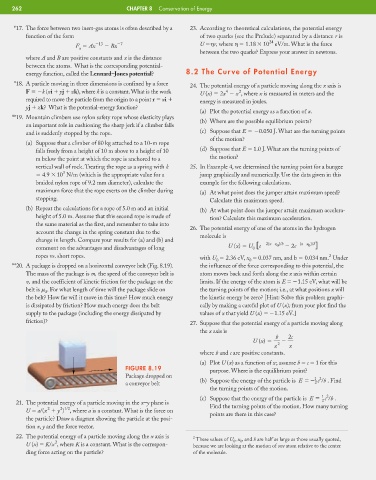
                                                  FIGURE 8.19               purpose. Where is the equilibrium point?
                                                  Package dropped on                                        1 2
                                                                         (b) Suppose the energy of the particle is  E    c /b  . Find
                                                  a conveyor belt                                           2
                                                                            the turning points of the motion.
                                                                                                              1 2
                                                                         (c) Suppose that the energy of the particle is  E   c /b  .
                                                                                                              2
                 21. The potential energy of a particle moving in the x–y plane is  Find the turning points of the motion. How many turning
                               2 1/2
                           2
                    U   a/(x   y ) , where a is a constant. What is the force on
                                                                            points are there in this case?
                    the particle? Draw a diagram showing the particle at the posi-
                    tion x, y and the force vector.
                 22. The potential energy of a particle moving along the x axis is  2  These values of U , x , and b are half as large as those usually quoted,
                                                                                   0
                                                                                     0
                             2
                    U (x)   K/x , where K is a constant. What is the correspon-  because we are looking at the motion of one atom relative to the center
                    ding force acting on the particle?                 of the molecule.

