


Page 209 - fbkCardioDiabetes_2017
P. 209
Cardio Diabetes Medicine 2017                                    185


                 dial infarction (MI), heart failure, and ischemia-driven revascularization within 12 months) occurred in 10.0% of
                 the complete revascularization group versus 21.2% in the IRA-only revascularization group (hazard ratio: 0.45;
                 95% confidence interval: 0.24 to 0.84;  p=0.009),  though  statistically not signficant. A  trend toward benefit
                 was seen early  after complete revascularization (p=0.055 at 30 days). There  was no reduction in ischemic
                 burden on myocardial perfusion scintigraphy or in the safety endpoints of major bleeding, contrast-induced
                 nephropathy, or stroke between the groups.

                 Both these trials were not in line with the current practice of physiological (FFR) or histopathological (IVUS/
                 OCT)  assessment  of coronary stenosis  and angiographic  assessment  was used as criteria  for  non-culprit
                 PCI. uncertainty  remains about  whether PCI of noninfarct-  related  vessels  should be done during primary
                 PCI (as was done in the PRAMI trial) or as a staged procedure, either during the index admission or within
                 2 months of primary PCI, which most large registries indicate.
                 Third DANish  Study of Optimal  Acute  Treatment  of Patients  with  ST-segment  Elevation  Myocardial Infarc-
                 tion The  PRImary PCI in MULTIvessel  Disease  (DANAMI3-PRIMULTI) trial  compared a strategy  of fractional
                 flow reserve (FFR)-guided complete revascularisation 2 days after initial PCI of the infarct-related artery with
                 one of no further invasive treatment after PCI[13]. Events comprising the primary endpoint were recorded in
                 68 (22%) patients who had PCI of the infarct-related artery only and in 40 (13%) patients who had complete
                 revascularisation (hazard ratio 0∙56, 95% CI 0∙38–0∙83; p=0∙004), this was driven by need for repeat revascu-
                 larisation. The use of FFR guidance changed the initial management plan substantially because, in almost a
                 third of patients allocated to complete revascularisation, FFR showed that the nonculprit-related lesions that
                 had  appeared significant  on angiography  were  non-significant  led to fewer  interventions.  FFR was done 2
                 days after in index event to avoid the risk of invalid FFR measurements inferred from any acute changes in
                 macrovascular tone or microvascular flow obstruction.
                 In the PRAGUE-13 trial[14], 214 STEMI patients with double or triple vessel disease were randomly assigned to
                 culprit-lesion-only PCI or complete revascularization (non-culprit vessel PCI as a staged procedure within 3–40
                 days after the index event). Patients with stable angina for more than 1 month prior to the vent were excluded
                 from the trial. But the result indicate no significant difference between the two groups in hospitalization for
                 all-cause death, nonfatal MI and stroke, which occurred in 16% of patients in the multivessel PCI group vs.
                 13.9% in the conservative therapy group (HR = 1.35; 95% CI, 0.66-2.74) and unstable angina (P =0.193) or hos-
                 pitalization for HF (P =0.672), CV mortality (P =0.699) and revascularization for a noninfarct artery (P =0.089).
                 This study did not include ischaemia-driven revascularisation as part of the endpoint and was underpowered
                 to detect differences in hard endpoints. It is generally regarded as a trial of less significant non-IRA lesions.


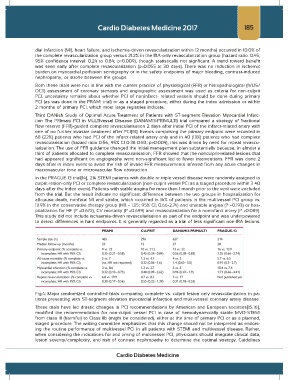
                 Fig.4: Major randomized controlled trials comparing complete vs. culprit lesion only revascularization in pa-
                 tients presenting with ST-segment elevation myocardial infarction and multi-vessel coronary artery disease
                 These  trials  have led  drastic changes in PCI recommendations  by  American and European societies[15,16],
                 modified  the recommendation  for  non-culprit vessel  PCI  in case of  hemodynamically stable  MVD-STEMI
                 from class III (harmful) to Class IIb (might be considered), either at the time of primary PCI or as a planned,
                 staged procedure. The writing committee emphasizes that this change should not be interpreted as endors-
                 ing the routine performance of multivessel PCI in all patients with  STEMI  and  multivessel disease.  Rather,
                 when considering the indications for and timing of multivessel PCI, physicians should integrate clinical data,
                 lesion  severity/complexity,  and risk  of  contrast nephropathy  to determine  the optimal  strategy.  Guidelines


                                                    Cardio Diabetes Medicine

