


Page 210 - fbkCardioDiabetes_2017
P. 210
Non-Infarct Related Artery Intervention  in St-Elevation Myocardial Infarc-
                 186               tion With Multivessel Disease: MultiVessel PCI in STEMI:
                                                       Timing of Intervention?


              observed that, there is no sufficient data to recommend the optimal timing of nonculprit vessel PCI and the
              optimal method of evaluating nonculprit lesions (eg, percent diameter stenosis , fractional flow reserve)[15].


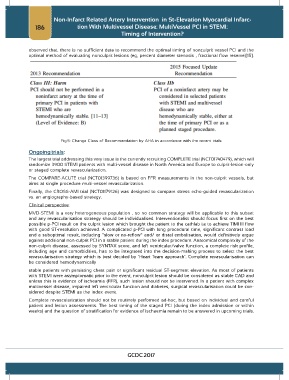
                            Fig.5: Change Class of Recommendation by AHA in accordance with the recent trials

              Ongoing trials:
              The largest trial addressing this very issue is the currently recruiting COMPLETE trial (NCT01740479), which will
              randomize 3900 STEMI patients with multi-vessel disease in North America and Europe to culprit-lesion-only
              or staged complete revascularization.
              The COMPARE-ACUTE  trial (NCT01399736)  is based on FFR measurements in the  non-culprit  vessels,  but
              aims at single procedure multi-vessel revascularization.
              Finally,  the CROSS-AMI  trial  (NCT01179126)  was designed  to compare  stress  echo-guided  revascularization
              vs. an angiography-based strategy.

              Clinical perspective:
              MVD-STEMI is a very heterogeneous population , so no common strategy will be applicable to this subset
              and  any revascularisation strategy should be individualised. Interventionalist should focus first on the best
              possible p-PCI result on the culprit lesion which brought the patient to the cathlab i.e to achieve TIMI III flow
              with  good ST-resolution achieved.  A complicated  p-PCI  with  long procedural  time, significant  contrast  load
              and a suboptimal result, including “slow or no-reflow” and/ or distal embolisation, would definitively argue
              against additional non-culprit PCI in a stable patient during the index procedure. Anatomical complexity of the
              non-culprit disease, assessed by SYNTAX score, and left ventricular/valve function, a complete risk profile,
              including  age and  comorbidities, has to be integrated into  the  decision-making process  to select the  best
              revascularisation strategy which is best decided by ‘Heart Team approach’. Complete revascularisation can
              be considered hemodynamically

              stable patients with persisting chest pain or significant residual ST-segment elevation. As most of patients
              with STEMI were asymptomatic prior to the event, nonculprit lesion should be considered as stable CAD and
              unless this is evidence of ischeamia (FFR), such lesion should not be intervened. In a patient with complex
              multivessel disease, impaired left ventricular function and diabetes, surgical revascularisation could be con-
              sidered despite STEMI as the index event.
              Complete  revascularization  should not be  routinely  performed  ad-hoc,  but based  on individual and careful
              patient and  lesion  assessments.  The best timing of the staged PCI (during the index admission or  within
              weeks) and the question of stratification for evidence of ischaemia remain to be answered in upcoming trials.


                                                         GCDC 2017

