


Page 208 - fbkCardioDiabetes_2017
P. 208
Non-Infarct Related Artery Intervention  in St-Elevation Myocardial Infarc-
                 184               tion With Multivessel Disease: MultiVessel PCI in STEMI:
                                                       Timing of Intervention?


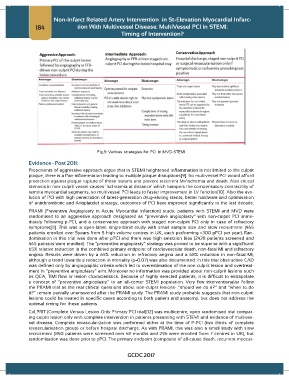
                                            Fig.3: Various strategies for PCI in MVD-STEMI

              Evidence - Post 2011:
              Proponents of aggressive approach argue that in STEMI heightened inflammation is not limited to the culprit
              plaque, there is a Pan-inflammation leading to multiple plaque disruptions[9]. So multivessel PCI would afford
              protection against plaque rupture of these lesions and prevent recurrent MI/ischemia and death. Also critical
              stenosis in non-culprit vessel causes ‘ischeamia at distance’ which hampers the compensatory contractility of
              remote myocardial segments, so multivessel PCI leads to faster improvement in LV function[10]. Also the evo-
              lution of PCI with high penetration of latest-generation drug-eluting stents, better hardware and optimisation
              of antithrombotic and Antiplatelet strategy, outcomes of PCI have improved significantly in the last decade.
              PRAMI  (Preventive  Angioplasty  in  Acute Myocardial  Infarction)  study, patients  with STEMI  and MVD  were
              randomised  to an aggressive  approach  designated  as  “preventive  angioplasty”  with non-culprit PCI  imme-
              diately following p-PCI, and  a conservative  approach with  staged non-culprit  PCI only in case of refractory
              symptoms[11]. This  was  a open-label,  single-blind  study  with small  sample  size  and slow  recruitment (465
              patients enrolled over 5years from 5 high volume centres in UK, each performing >300 pPCI per year). Ran-
              domisation in this trial was done after pPCI and there was high selection bias (2428 patients screened and
              465 patients were enrolled). The “preventive angioplasty” strategy was proved to be superior with a significant
              65% relative reduction in the combined primary endpoint of cardiovascular death, non-fatal MI and refractory
              angina. Results were  driven by a 65% reduction  in refractory angina and a 68%  reduction  in non-fatal  MI,
              although a trend towards a reduction in mortality (p=0.07) was also documented. In this trial obstructive CAD
              was defined only by angiographic criteria which led to overestimation of the non-culprit lesion and overtreat-
              ment in “preventive angioplasty” arm. Moreover no information was provided about non-culprit lesions such
              as QCA, TIMI flow or lesion characteristics. Because of highly selected patients, it is difficult to extrapolate
              a concept of  “preventive  angioplasty”  to an all-comer  STEMI  population.  Very  few  interventionalist follow
              the PRAMI trial as the real clinical questions about non-culprit lesions- “should we do it?” and “when to do
              it?” remain partially unanswered after the PRAMI study. The PRAMI study probably suggests that non-culprit
              lesions could be treated in specific cases according to both patient and anatomy, but does not address the
              optimal timing for these patients.
              CvLPRIT (Complete Versus Lesion-Only Primary PCI trial)[12] was multicentre, open randomised trial compar-
              ing culprit lesion only with complete intervention in patients presenting with STEMI and evidence of multives-
              sel  disease.  Complete  revascularization was  performed  either  at the time  of  P-PCI  (two thirds  of  complete
              revascularisation group) or before hospital discharge. As with PRAMI, this was also a small study with slow
              recruitment (850 patients were screened over 48 months and 296 were enrolled from 7 centres in UK); but
              randomisation was done prior to pPCI. The primary endpoint (composite of all-cause death, recurrent myocar-


                                                         GCDC 2017

