


Page 247 - fbkCardioDiabetes_2017
P. 247
Bradyarrhythmias                                       223


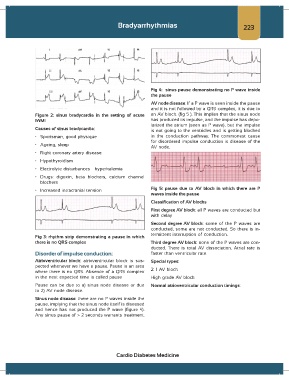
                                                                    Fig 4:  sinus  pause demonstrating no P wave inside
                                                                    the pause

                                                                    AV node disease: If a P wave is seen inside the pause
                                                                    and it is not followed by a QRS complex, it is due to
                 Figure 2: sinus  bradycardia  in the setting  of  acute   an AV block. (fig 5 ). This implies that the sinus node
                 IWMI                                               has produced its impulse, and the impulse has depo-
                                                                    larized the atrium (seen as P wave), but the impulse
                 Causes of sinus bradycardia:                       is not going to the ventricles and is getting blocked
                 •  Sportsman, good physique                        in the conduction  pathway. The commonest  cause
                                                                    for disordered impulse conduction is disease of the
                 •  Ageing, sleep
                                                                    AV node.
                 •  Right coronary artery disease

                 •  Hypothyroidism
                 •  Electrolyte disturbances – hyperkalemia
                 •  Drugs: digoxin, beta blockers,  calcium  channel
                   blockers

                 •  Increased intracranial tension                  Fig 5:  pause due to AV block  in which  there are  P
                                                                    waves inside the pause
                                                                    Classification of AV blocks
                                                                    First degree AV block: all P waves are conducted but
                                                                    with delay

                                                                    Second  degree AV block:  some  of  the P  waves  are
                                                                    conducted,  some  are  not conducted.  So  there  is  in-
                                                                    termittent interruption of conduction.
                 Fig  3:  rhythm strip  demonstrating  a pause  in  which
                 there is no QRS complex                            Third degree AV block: none of the P waves are con-
                                                                    ducted.  There  is total  AV dissociation. Atrial rate is
                 Disorder of impulse conduction:                    faster than ventricular rate.
                 Atrioventricular  block: atrioventricular block is  sus-  Special types:
                 pected whenever we have a pause. Pause is an area
                 where there is no QRS. Absence of a QRS complex    2: 1 AV block
                 in the next expected time is called pause          High grade AV block

                 Pause  can be  due  to a) sinus  node  disease  or  due   Normal atrioventricular conduction timings:
                 to 2) AV node disease.
                 Sinus node disease: there are no P waves inside the
                 pause, implying that the sinus node itself is diseased
                 and  hence  has not  produced the P wave (figure 4).
                 Any sinus pause of > 2 seconds warrants treatment.


                                                    Cardio Diabetes Medicine

