


Page 60 - Hall et al (2015) Principles of Critical Care-McGraw-Hill
P. 60
CHAPTER 4: Infection Prevention and Surveillance in the Intensive Care Unit  29


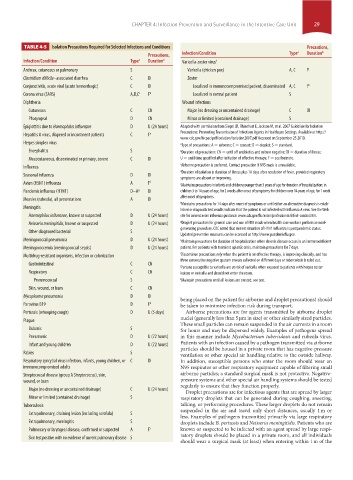
                      TABLE 4-5    Isolation Precautions Required for Selected Infections and Conditions             Precautions,
                                                               Precautions,   Infection/Condition              Type a  Duration b
                    Infection/Condition                  Type a  Duration b  Varicella-zoster virus f
                    Anthrax, cutaneous or pulmonary      S                  Varicella (chicken pox)            A, C  F j
                    Clostridium difficile–associated diarrhea  C  DI        Zoster
                    Conjunctivitis, acute viral (acute hemorrhagic)  C  DI    Localized in immunocompromised patient, disseminated A, C  F k
                    Corona virus (SARS)                  A,D,C c  F d         Localized in normal patient      S
                    Diphtheria                                            Wound infections
                      Cutaneous                          C     CN           Major (no dressing or uncontained drainage)  C  DI
                      Pharyngeal                         D     CN           Minor or limited (contained drainage)  S
                    Epiglottitis due to Haemophilus influenzae  D  U (24 hours)  Adapted with permission from Siegel JD, Rhinehart E, Jackson M, et al. 2007 Guideline for Isolation
                                                                          Precautions: Preventing Transmission of Infectious Agents in Healthcare Settings. Available at http://
                    Hepatitis A virus, diapered or incontinent patients  C  F e
                                                                          www.cdc.gov/hicpac/pdf/isolation/Isolation2007.pdf Accessed on September 23 2010.
                    Herpes simplex virus                                  a Type of precautions: A = airborne; C = contact; D = droplet; S = standard.
                      Encephalitis                       S                b Duration of precautions: CN = until off antibiotics and culture negative; DI = duration of illness;
                      Mucocutaneous, disseminated or primary, severe  C  DI  U = until time specified after initiation of effective therapy; F = see footnote.
                                                                          c Airborne precaution is preferred. Contact precaution if N95 mask is unavailable.
                    Influenza
                                                                          d Duration of isolation is duration of illness plus 10 days after resolution of fever, provided respiratory
                    Seasonal influenza                   D     DI
                                                                          symptoms are absent or improving.
                    Avian (H5N1) influenza               A     F f        e Maintains precautions in infants and children younger than 3 years of age for duration of hospitalization; in
                    Pandemic influenza (H1N1)            D~A g  DI        children 3 to 14 years of age, for 2 weeks after onset of symptoms; for children over 14 years of age, for 1 week
                                                                          after onset of symptoms.
                    Measles (rubeola), all presentations  A    DI
                                                                          f Maintains precautions for 14 days after onset of symptoms or until either an alternative diagnosis is estab-
                    Meningitis
                                                                          lished or diagnostic test results indicate that the patient is not infected with influenza A virus. See the Web
                      Haemophilus influenzae, known or suspected  D  U (24 hours)  site for current avian influenza guidance: www.cdc.gov/flu/avian/professional/infect-control.htm.
                      Neisseria meningitidis, known or suspected  D  U (24 hours)  g Droplet precaution for general care and use of N95 mask when health care workers perform aerosol-
                                                                          generating procedure. CDC noted that current situation of H1N1 influenza is postpandemic status.
                      Other diagnosed bacterial          S
                                                                          Updated preventive measures can be accessed at http://www.pandemicflu.gov.
                    Meningococcal pneumonia              D     U (24 hours)  h Maintain precautions for duration of hospitalization when chronic disease occurs in an immunodeficient
                    Meningococcemia (meningococcal sepsis)  D  U (24 hours)  patient. For patients with transient aplastic crisis, maintain precautions for 7 days.
                    Multidrug-resistant organisms, infection or colonization  i Discontinue precautions only when the patient is on effective therapy, is improving clinically, and has
                                                                          three consecutive negative sputum smears collected on different days or tuberculosis is ruled out.
                      Gastrointestinal                   C     CN
                                                                          j Persons susceptible to varicella are at risk of varicella when exposed to patients with herpes zoster
                      Respiratory                        C     CN         lesions or varicella and should not enter the room.
                        Pneumococcal                     S                k Maintain precautions until all lesions are crusted; see text.
                      Skin, wound, or burn               C     CN
                    Mycoplasma pneumonia                 D     DI
                                                                          being placed on the patient for airborne and droplet precautions) should
                    Parovirus B19                        D     F h        be taken to minimize infection risk during transport.
                    Pertussis (whooping cough)           D     U (5 days)   Airborne precautions are for agents transmitted by airborne droplet
                                                                          nuclei (generally less than 5 μm in size) or other similarly sized particles.
                    Plague
                                                                          These small particles can remain suspended in the air currents in a room
                      Bubonic                            S                for hours and may be dispersed widely. Examples of pathogens spread
                      Pneumonic                          D     U (72 hours)  in this manner include Mycobacterium tuberculosis and rubeola virus.
                      Infant and young children          D     U (72 hours)  Patients with an infection caused by a pathogen transmitted via airborne
                                                                          particles should be housed in a private room that has negative-pressure
                    Rabies                               S                ventilation or other special air handling relative to the outside hallway.
                    Respiratory syncytial virus infection, infants, young children, or  C  DI  In addition, susceptible persons who enter the room should wear an
                    immunocompromised adults                              N95 respirator or other respiratory equipment capable of filtering small
                    Streptococcal disease (group A Streptococcus), skin,    airborne particles; a standard surgical mask is not protective. Negative-
                    wound, or burn                                        pressure systems and other special air handling systems should be tested
                                                                          regularly to ensure that they function properly.
                      Major (no dressing or uncontained drainage)  C  U (24 hours)
                                                                            Droplet precautions are for infectious agents that are spread by larger
                      Minor or limited (contained drainage)  S            respiratory droplets that can be generated during coughing, sneezing,
                    Tuberculosis                                          talking, or performing procedures. These larger droplets do not remain
                                                                          suspended in the air and travel only short distances, usually 1 m or
                      Extrapulmonary, draining lesion (including scrofula)  S
                                                                          less. Examples of pathogens transmitted primarily via large respiratory
                      Extrapulmonary, meningitis         S                droplets include B. pertussis and Neisseria meningitidis. Patients who are
                      Pulmonary or laryngeal disease, confirmed or suspected  A  F i  known or suspected to be infected with an agent spread by large respi-
                                                                          ratory droplets should be placed in a private room, and all individuals
                      Skin test positive with no evidence of current pulmonary disease S
                                                                          should wear a surgical mask (at least) when entering within 1 m of the


            Section01.indd   29                                                                                        1/22/2015   9:36:48 AM

